Schedule a call with our expert web design and answer engine optimization team today to discuss how we can improve search visibility and upscale your brand's online presence in just 30 days.
Mobile voice search is revolutionizing SEO, with 72% of Americans using voice search on their phones daily and 50% of queries having local intent. This comprehensive guide reveals how to optimize your content for conversational keywords, secure featured snippets, implement schema markup, and dominate voice search results through mobile-first strategies that align with how users naturally speak to their devices.
Article Summary
How popular is mobile voice search?
72% of Americans use voice search on their phones daily, with 20–25% of Android searches being voice-based. Voice search is rapidly becoming the preferred method for mobile queries.
What makes voice search different from text search?
Voice searches are longer, more conversational, and often phrased as natural questions. Users speak to devices like they're talking to a person, using complete sentences instead of keyword fragments.
Why is local SEO crucial for voice search?
50% of voice searches have local intent, with users looking for nearby businesses, services, or information. Mobile voice search is heavily location-dependent and immediate-need focused.
What technical factors impact voice search rankings?
Mobile page speed, responsive design, schema markup, and structured data are critical. Voice assistants prioritize fast-loading, mobile-optimized sites with clear content structure.
How do featured snippets relate to voice search?
Voice assistants often read featured snippet content as answers. Optimizing for position zero increases your chances of being selected for voice search responses significantly.
Mobile voice search is reshaping SEO. By 2025, over 50% of searches are expected to be voice-based, with 64% of web traffic already coming from mobile devices. Unlike text searches, voice queries are longer, conversational, and often question-based (e.g., "Where’s the nearest coffee shop?"). This shift demands new strategies for businesses to stay visible online.
Key Takeaways:
Voice Search Growth: Voice commerce is projected to reach $80 billion annually by 2025.
Featured Snippets Matter: Voice assistants prioritize concise, direct answers from position zero.
Mobile Optimization: Fast load times (under 2.5 seconds) and meeting Core Web Vitals are critical.
Local SEO: 58% of voice searches are local; an accurate Google Business Profile and schema markup are essential.
Natural Language Queries: Focus on FAQs, long-tail keywords, and conversational content.
Why It Matters:
Voice search delivers single spoken answers, making competition for top spots fierce. Businesses must optimize for mobile performance, structured data, and user intent to stay relevant in the growing voice-first search landscape.
Key Factors in Mobile Voice Search Optimization
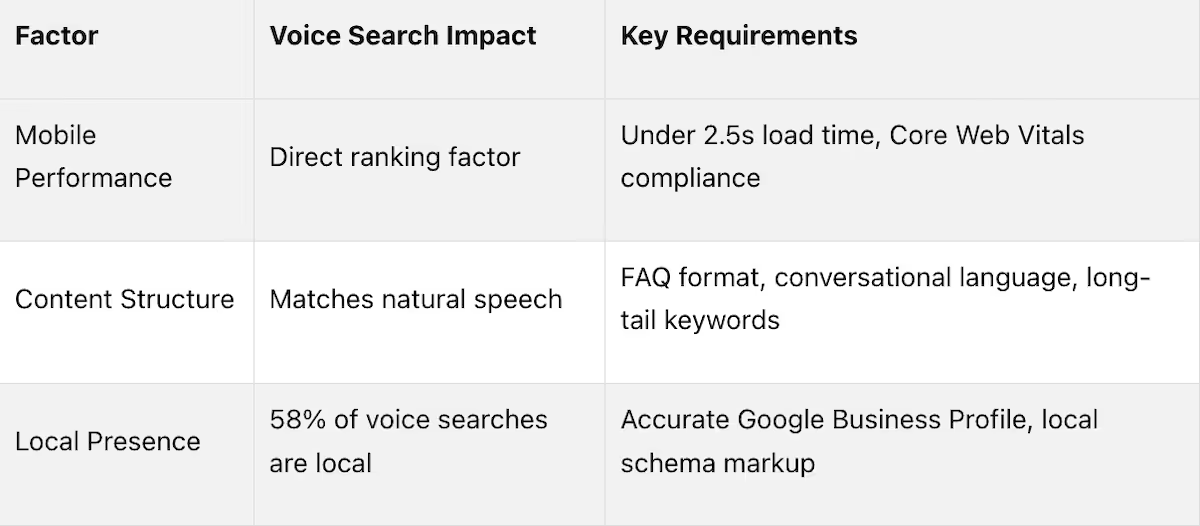
Adapting your SEO strategy for mobile voice search requires a focus on both technical and content-specific adjustments. Unlike text-based search, voice queries rely on conversational language and are often executed on mobile devices. To rank well in voice search, you need to address several key factors.
Mobile Optimization Requirements
A responsive design is the bedrock of mobile voice search optimization. Since Google's mobile-first indexing became the standard in 2021, the performance of your mobile site directly influences your rankings. Essentially, search engines now prioritize the mobile version of your site when determining where you stand in search results[1].
Fast load times are non-negotiable. Voice search users expect quick answers, and pages that take longer than 2.5 seconds to load are unlikely to make the cut[1][3]. Slow-loading sites are often excluded from voice search results entirely, as they fail to meet user expectations.
Meeting Core Web Vitals standards is another crucial step. These metrics - Largest Contentful Paint (LCP) for loading speed, First Input Delay (FID) for interactivity, and Cumulative Layout Shift (CLS) for visual stability - directly affect your site's usability and, consequently, its voice search visibility[1][3].
Your website must also maintain a secure HTTPS connection and ensure that all content is easily crawlable by search engines. Voice assistants rely on properly indexed content to provide answers, so any technical barriers can severely hinder your visibility. Additionally, aligning your content with the natural language style of voice queries is essential for success.
Working with Natural Language Queries
Voice search queries tend to mirror everyday speech, which means they often take the form of complete, conversational questions. For example, instead of typing "pizza delivery Chicago", users might ask, "What's the best pizza delivery near me open now?" This shift in query style demands content that reflects natural speech patterns[1][2].
Using an FAQ format and targeting long-tail keywords can help you capture these conversational queries. Focus on question-based keywords that start with "what", "where", "how", "when", and "why." These align closely with the way people phrase their voice searches[1][2].
Keep answers clear and concise, ideally addressing the query within the first few sentences of your content[1][3]. Structuring your content with headings, bullet points, and logical breaks can also help voice assistants extract the most relevant information. This approach ensures your content is optimized for natural language processing technologies used by search engines[1][2].
Local SEO for Voice Search
Since 58% of voice searches are local, optimizing for local SEO is critical. Start by ensuring your Google Business Profile is accurate and up-to-date. Include essential details like your name, address, phone number, hours, and services. Voice assistants often pull data from these profiles to answer local queries[1][2].
Implementing local schema markup can also improve your visibility in local voice search results. This structured data should include your business address, phone number, operating hours, and the areas you serve[1][2].
Make sure your contact details are current across all platforms, as voice search users often need immediate answers. Encourage positive customer reviews, as they not only influence rankings but also provide social proof when voice assistants recommend your business[1][2].
How Mobile Voice Search Changes Search Results
Mobile voice search has flipped the script on how search results are delivered. Instead of offering a list of options to choose from, voice search zeroes in on a single spoken answer. This "winner-takes-all" approach changes ranking strategies and the way businesses engage with users. Let’s dive into how featured snippets and zero-click searches are reshaping the search landscape.
Featured Snippets and Zero-Click Searches
Voice assistants rely heavily on featured snippets, pulling their answers from the content ranked at position zero. Instead of directing users to multiple websites, they deliver a single, concise response aloud. This creates a zero-click experience, where users get their answers without needing to visit a website.
For businesses, this means the competition for featured snippets is fierce. Securing that coveted position zero has become a top priority. To achieve this, your content must provide clear and structured answers, typically within 40-50 words. Formats like Q&A sections, simple definitions, and well-organized lists perform particularly well. Voice assistants favor content that’s easy to read aloud and instantly understandable.
While zero-click searches might lower click-through rates, they still offer significant benefits. Being the chosen voice search answer boosts brand visibility, builds authority, and enhances recognition. These indirect gains can lead to increased traffic and engagement over time, even if users don’t immediately visit your site.
Traditional SEO vs. Mobile Voice Search Optimization
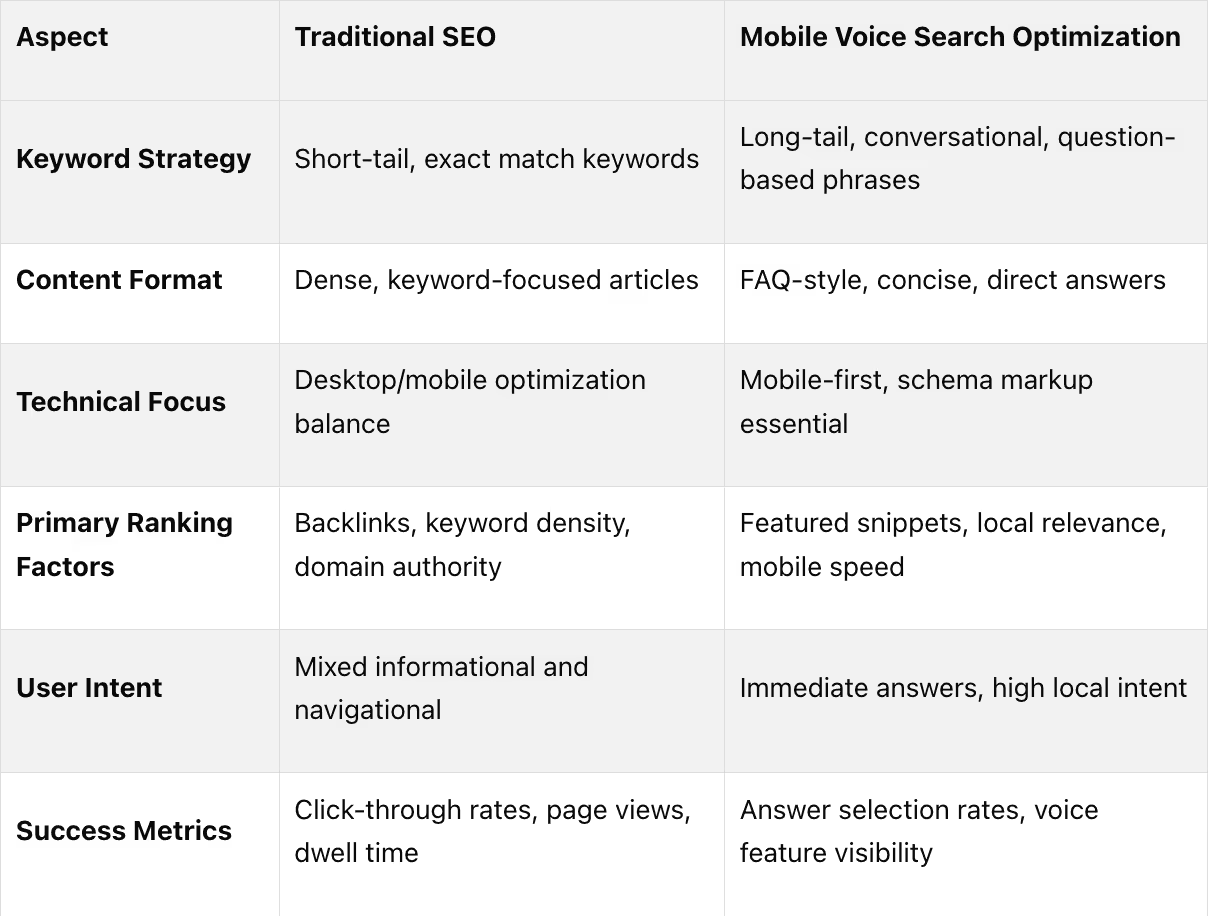
The rise of voice search has completely reshaped SEO strategies. Traditional methods no longer cut it in this voice-first world. Here’s how the two approaches differ:
One key shift is the move toward conversational keywords. Instead of targeting phrases like "pizza delivery Chicago", voice search focuses on natural, question-based queries such as, "What’s the best pizza delivery near me open now?" This means your content needs to reflect how people speak, not just how they type.
Additionally, structured data and schema markup are no longer optional - they’re essential. Voice assistants rely on this information to understand your content and feature it effectively. Without it, your chances of being selected for voice search drop significantly.
Changes in User Behavior Metrics
Mobile voice search has introduced new patterns in user behavior, which in turn have altered how SEO success is measured. For example, bounce rates may appear higher because users often get their answers directly from voice search without visiting a website. But this isn’t a sign of failure - it’s evidence that your content successfully delivered the information they needed.
Voice search users tend to have higher intent for immediate action, especially with local queries. When someone asks, "Where’s the nearest gas station?" they’re looking for actionable, real-time information - not a page to browse.
Traditional metrics like session duration and page views are becoming less relevant for voice search. Instead, businesses should focus on tracking metrics like voice search rankings, featured snippet acquisition rates, and local voice search visibility. The goal shifts from driving website traffic to establishing authority by delivering precise answers.
Another unique behavior pattern is the tendency for follow-up questions. Voice search users often continue the conversation with their assistant, asking for additional details or refinement. This presents an opportunity for businesses to anticipate related queries and address them within their content.
Finally, local intent plays a major role in voice search. With 58% of consumers using voice to find local information[2], businesses like restaurants, stores, and service providers often see voice search driving phone calls, in-store visits, or immediate actions rather than traditional web traffic. Adjusting conversion tracking to account for these offline actions is now a crucial part of any voice search strategy.
As user behavior continues to evolve, businesses need to rethink their SEO strategies to stay relevant in this voice-driven era. Voice search isn’t just a trend - it’s a fundamental shift in how people interact with search engines.
Steps to Optimize for Mobile Voice Search
As mobile voice search becomes a bigger part of how people interact with technology, adapting your strategy is key. Optimizing for this requires a mix of content tweaks, technical updates, and regular performance checks. Let’s dive into the steps that can help you succeed in this space.
Content Optimization for Voice Search
To start, think about how people naturally speak when using voice search. Crafting content that mirrors conversational language is crucial. A great way to do this is by creating FAQ pages that directly answer the questions your audience is asking. Use a tone that feels natural when spoken aloud.
Focus on long-tail, question-based keywords. For example, instead of targeting “pizza delivery Chicago,” aim for phrases like, “What’s the best pizza delivery near me open late?” These specific, conversational queries better match how people talk to their devices.
Keep your answers short and to the point. Voice assistants prefer concise responses that are easy to read aloud. Use clear headings, bullet points, and well-organized sections to address user questions. For instance, if you own a local business, make sure your content answers questions like, “What are your hours?”, “Do you deliver?”, or “Where are you located?” in a conversational style.
Localized content is also key. Most voice searches are done on the go, so users expect quick answers tailored to their location and needs. Make sure your content delivers relevant, immediate information.
Finally, consider the intent behind voice searches. Many users are multitasking or looking for fast answers. Structure your content to provide information quickly and clearly.
Once your content is optimized, it’s time to tackle the technical side of voice search.
Technical SEO for Voice Search
Technical improvements are just as important as content when it comes to voice search. Start with structured data and schema markup. For example, using FAQPage schema for your question-and-answer content and Speakable schema can help voice assistants identify parts of your content that are suitable for reading aloud. These tools make it easier for search engines to understand and feature your content in voice search results [1][2].
Make sure your website is mobile-friendly. With mobile devices driving 64% of web traffic by 2025 [4], responsive design, intuitive navigation, and accessible content are non-negotiable.
Your site’s architecture matters, too. A clear structure with logical URLs, simple navigation, and strong internal linking helps both users and voice assistants find the information they need quickly.
Tracking and Adjusting with Analytics
After optimizing your content and technical setup, it’s time to measure how well your efforts are paying off. Tools like Google Search Console and Google Analytics are essential for monitoring voice search performance, though you’ll need to adjust your focus to metrics relevant to voice search [2][3].
Pay attention to the queries that bring voice-driven traffic to your site, especially conversational and question-based terms. Look for patterns in the content that voice assistants frequently feature and how users interact with your site after a voice search.
Keep in mind that bounce rates may be higher for voice search, as users often get their answers directly from the search results without clicking through. Instead, focus on metrics like the rate at which your content appears in featured snippets, your visibility in local voice searches, and the quality of the traffic that does visit your site.
Also, track offline actions resulting from voice searches. With 58% of consumers using voice search to find local information [2], many interactions lead to phone calls, store visits, or immediate purchases rather than traditional online conversions. Adjust your tracking to account for these valuable outcomes.
Review your analytics monthly to refine your strategy. As voice search technology and user behaviors evolve, these regular check-ins can help you stay ahead. For example, you might discover new opportunities or areas where your content needs updating.
How Lite Studio Supports Voice Search Optimization
Tackling voice search optimization can feel like a daunting task, especially for large enterprises managing content-heavy websites. But Lite Studio simplifies the process with a blend of technical know-how and user-focused design. Here’s a closer look at how Lite Studio uses tailored strategies to help businesses thrive in the voice search era.
Using Answer Engine Optimization (AEO)
Lite Studio’s Answer Engine Optimization (AEO) service is designed to adapt website content for the conversational, question-based queries that dominate voice search [6][2]. This goes beyond regular SEO by implementing tools like schema markup and optimizing for featured snippets. These features make enterprise content more likely to be chosen as the single spoken answer by voice assistants such as Google Assistant, Siri, and Alexa[6][5].
For instance, Lite Studio worked with a large retail client to overhaul their product and FAQ pages using AEO best practices. This included adding schema markup and structuring Q&A sections effectively. Within just three months, the client experienced a 35% increase in featured snippet placements and a 22% boost in voice search-driven traffic, based on analytics tracking voice assistant referrals and zero-click searches [5].
Here’s why this works: 40.7% of voice search answers come from featured snippets[5]. By developing FAQ sections with concise, well-organized answers, Lite Studio ensures enterprise content is ready to be picked up by voice assistants.
Streamlining Complex Websites for Voice Search
Large enterprises often face challenges when adapting their websites for voice search. Lite Studio tackles this by optimizing not just the content but also the overall website structure. Their approach focuses on improving site speed, enhancing mobile responsiveness, and creating clear, hierarchical layouts that cater to both traditional and voice search indexing [4].
A key part of this process involves technical audits. Lite Studio evaluates factors like mobile speed, Core Web Vitals, and HTTPS usage. This is crucial because 70.4% of voice search URLs use HTTPS[5], and pages appearing in voice search results tend to have strong technical foundations, with domain ratings averaging 76.8 [5].
Lite Studio also conducts in-depth UX research to understand how users interact with content via voice and mobile devices. This research highlights user pain points and identifies areas for improvement [2]. The insights gained are then applied to simplify navigation, restructure content, and create conversational content that aligns with natural language queries, ultimately boosting user satisfaction and search performance.
Getting Results with Generative Engine Optimization (GEO)
As search technology evolves, Lite Studio stays ahead with Generative Engine Optimization (GEO) strategies. This approach combines advanced content generation with data-driven UX research to create materials that not only address current user queries but also anticipate future trends [2]. It’s a forward-thinking strategy essential for maintaining visibility in an ever-changing search landscape.
GEO involves analyzing user intent and using AI tools to produce multimodal content - text, audio, and visuals - optimized for both voice and generative AI search engines [2]. This is increasingly important as voice search is expected to account for over 50% of all searches by 2025[2], fundamentally altering how users discover content online.
What sets Lite Studio apart is their focus on long-tail, conversational queries, mobile-first design, and direct answers tailored for voice assistants [6][2]. Unlike traditional SEO, which often revolves around short keywords and desktop usage, Lite Studio emphasizes intent-based content, structured data, and user-friendly design.
The results speak for themselves: higher rankings, better click-through rates, and increased chances of being featured as the spoken answer in voice search results. Considering that over 80% of Google voice assistant answers come from the top three search results[5], Lite Studio’s strategies ensure enterprises stay highly visible as mobile voice search continues to reshape digital discovery.
Conclusion: Preparing for Voice Search Growth
The rise of mobile voice search is fundamentally changing how people find and engage with online content. With voice searches expected to make up over 50% of all searches by 2025 [2], businesses that adjust their SEO strategies today will be better positioned to stay ahead in the competitive digital landscape.
The numbers speak for themselves: voice commerce is forecasted to reach $80 billion annually by 2025 [2]. Additionally, over 80% of Google voice search answers are pulled from the top three results [5], highlighting the revenue potential for businesses that optimize effectively.
Voice queries tend to be longer, averaging 29 words compared to the 3–4 words typical of text searches [5]. On top of that, 58% of consumers now rely on voice search to find local information [2]. To meet these changing behaviors, businesses need to rethink their keyword strategies and how they structure their content.
Technical adjustments are just as important. For instance, 70.4% of voice search result URLs use HTTPS [5]. These aren’t just minor updates - they’re essential steps to ensure visibility in voice search results.
For larger organizations managing content-heavy websites, the challenge becomes even more complex. Expertise in areas like answer engine optimization (AEO) and generative engine optimization (GEO) is increasingly valuable. Lite Studio, for example, specializes in transforming intricate sites into user-friendly designs that perform well in both traditional and voice search environments, ensuring businesses remain visible as search technology evolves.
The businesses that succeed in this new landscape will embrace conversational content, adopt mobile-first strategies, and implement precise structured data. On the other hand, those that hesitate risk falling behind, especially as voice assistants prioritize delivering single, definitive answers.
Voice search is no longer a trend - it’s the present, directly connecting businesses to their customers. The time to adapt is now, and the opportunity is waiting to be seized.
FAQs
How can businesses optimize their content to appear in voice search results?
To increase the likelihood of showing up in voice search results, businesses should focus on crafting content that answers common user questions clearly and directly. Use natural language and a conversational tone to reflect how people typically phrase queries when speaking.
Organizing your content with featured snippets in mind - like question-and-answer sections or bullet points - can also boost visibility. On the technical side, make sure your website has fast load times, is mobile-friendly, and includes proper schema markup to meet search engine requirements.
For more customized solutions, businesses can turn to experts like Lite Studio. They specialize in optimizing content for AI-driven and voice search technologies, ensuring your content stays ahead in this fast-changing landscape.
What technical updates are essential for optimizing your site for mobile voice search?
To make your site shine in mobile voice search, start by focusing on page speed, ensuring your site loads quickly and efficiently. Pair this with a mobile-friendly design that works seamlessly across devices, and use structured data to help search engines understand your content better. Since voice search queries tend to be conversational, incorporate natural language and aim for long-tail keywords in your content. Providing clear, concise answers to common questions can also boost your chances of appearing in voice search results.
If you want to stay ahead of the curve, teaming up with experts like Lite Studio can be a smart move. They specialize in refining site design and improving visibility on AI-driven and voice search platforms.
How does local SEO help improve visibility for voice searches?
Local SEO is crucial for making sure your business shows up in voice search results, especially for those "near me" searches. Voice search tends to favor results that are relevant to the user's location and optimized for local intent.
To boost your visibility, start by refining your Google Business Profile. Make sure your business name, address, and phone number (NAP) are consistent across all platforms. On top of that, weave location-specific keywords into your content and metadata to match how people phrase their voice searches. These steps not only help your business get found but also ensure users see accurate, localized results that align with their voice search habits.
Key Points
How is mobile voice search fundamentally changing user search behavior compared to traditional text-based queries?
Query Length and Structure: Voice searches average 29 words compared to just 2–3 words for text searches, reflecting more natural, conversational language patterns.
Question-Based Format: Voice queries are predominantly framed as complete questions using “who,” “what,” “where,” “when,” and “how” rather than fragmented keyword phrases.
Local Intent Dominance: Approximately three-quarters of voice queries have “near me” intent, with users seeking immediate, location-based results for businesses, services, and directions.
Mobile-First Usage: 27% of users rely on mobile voice search daily, and over 55% of consumers use voice search to find local businesses on their mobile devices.
Conversational Tone: Users speak to voice assistants as they would to a human, using complete sentences and natural speech patterns.
Immediate Action Expectation: Voice search users expect instant, actionable answers rather than lists of links to browse.
What are the critical technical SEO elements that websites must optimize for mobile voice search success?
Page Speed Performance: Voice search results favor pages that load significantly faster—the average voice search result page loads in 4.6 seconds, 52% faster than the average webpage.
Mobile-First Indexing: Google’s mobile-first indexing means the mobile version of your site is prioritized for ranking and indexing in voice search results.
Structured Data Implementation: JSON-LD schema markup is essential for helping search engines understand content context and improve chances of being featured in rich results.
HTTPS Security: Secure sites with SSL certificates are strongly favored by voice assistants for providing trusted answers.
Clear Site Architecture: Logical navigation and content hierarchy improve both user experience and search engine crawlability for voice queries.
Responsive Design: Websites must be fully responsive and optimized for all mobile screen sizes.
Clean URL Structure: SEO-friendly URLs with clear hierarchies help voice assistants understand and categorize your content.
How should businesses approach local SEO optimization specifically for mobile voice search?
Google Business Profile Optimization: Maintain complete and accurate business information including name, address, phone, hours, services, and regular updates with posts and photos.
NAP Consistency: Ensure consistent Name, Address, and Phone (NAP) data across all directories and platforms to build local search authority.
Location-Specific Content: Create neighborhood-specific pages using local keywords, landmarks, and community references.
“Near Me” Optimization: Strategically incorporate “near me” variations and location-based long-tail keywords throughout your content and meta descriptions.
Local Schema Markup: Implement LocalBusiness schema to mark up business details, operating hours, contact information, and service areas.
Directory Management: Claim and optimize listings on Google, Apple Maps, Bing, Yelp, and other relevant local directories.
Review Management: Actively encourage and manage customer reviews since voice assistants often reference review data for recommendations.
What content optimization strategies are most effective for capturing mobile voice search traffic?
Featured Snippet Targeting: Structure content to provide concise, direct answers to common questions, as about 50% of voice search results are derived from featured snippets.
FAQ Section Development: Create comprehensive FAQ sections that address common customer questions using natural language.
Conversational Keyword Integration: Focus on 'ong-tail, question-based keywords that reflect natural speech patterns.
Clear Content Hierarchy: Use H2/H3 headers, bullet points, and short paragraphs for easy extraction by voice assistants.
Direct Answer Format: Provide immediate, actionable answers at the beginning of content sections.
Question-Answer Pairing: Structure content as natural question-answer pairs that mirror how users would verbally ask for information.
Local Content Creation: Develop location-specific content that addresses local needs and interests.
How should keyword research and strategy evolve for mobile voice search optimization?
Long-Tail Focus: Prioritize conversational, long-tail keywords that reflect natural speech and complete questions.
Question-Based Research: Use tools like Google’s “People Also Ask” and 'AnswerThePublic to identify common voice queries.
Intent-Based Targeting: Focus on local intent keywords since most voice searches are location-based.
Natural Language Processing: Optimize for semantic search by understanding user intent, not just matching exact phrases.
Voice-Specific Tools: Leverage voice search analytics and monitoring tools to track question-based keyword performance.
Competitor Voice Analysis: Study how competitors are ranking for voice queries and identify content gaps.
Seasonal Voice Patterns: Monitor seasonal trends in voice search queries to align content with peak demand.
What metrics and KPIs should businesses track to measure mobile voice search SEO success?
Featured Snippet Performance: Monitor position zero rankings and track how often your content appears in featured snippets for target voice queries.
Local Pack Visibility: Measure local search rankings and visibility in Google’s local pack results.
Mobile Page Speed: Track Core Web Vitals and mobile page speed metrics.
Voice Search Traffic: Use Google Search Console and Google Analytics to identify and measure voice search traffic patterns and conversions.
Question-Based Query Rankings: Monitor rankings for long-tail, conversational keywords and question-based search terms.
Schema Markup Performance: Track the effectiveness of structured data implementation and its impact on rich snippet appearances.
Local Listing Performance: Monitor Google Business Profile insights including search queries, customer actions, and review metrics.
Conversion Rate Analysis: Measure voice search conversion rates compared to traditional text search.
Get Started
Streamline your online presence and captivate users with a refined, single or minimal page experience. Schedule a call with our team today to discuss how we can simplify your site and elevate your brand in just 30 days.