
Lite Studio Webclip

Simplify Your Website. Elevate Your Brand.

Schedule a call with our expert web design and answer engine optimization team today to discuss how we can improve search visibility and upscale your brand's online presence in just 30 days.

Schedule Call

Navigational Intent: Best Practices For GEO

Tom Rezendes Lite Studio Headshot
Tom Rezendes
March 11, 2026
Lite Studio’s GEO solutions help your brand stand out in AI-powered search. With 24% conversion rates for AI-referred traffic, a focus on branded mentions, and expert schema markup, we ensure your business is the top recommendation for navigational queries—driving measurable new business growth.

Article Summary

What is Generative Engine Optimization (GEO) and why is it important for brands today?

Generative Engine Optimization (GEO) is the practice of optimizing your brand and content so that AI platforms like ChatGPT, Google AI Overviews, and Perplexity cite or recommend you in their answers. GEO is crucial because AI-driven search is rapidly growing, and being cited by these platforms leads to higher visibility and significantly better conversion rates compared to traditional search methods.

How do branded mentions impact AI search visibility compared to traditional backlinks?

Branded mentions are much more influential than traditional backlinks when it comes to AI visibility. Research shows that branded mentions have a three times higher correlation with being cited by AI engines than backlinks, making them a critical focus for any GEO strategy.

What role does schema markup play in improving AI recognition of your brand?

Schema markup, especially using JSON-LD for Organization and FAQPage schemas, makes your content machine-readable and helps AI systems clearly understand your brand and offerings. Implementing schema markup is a high-priority technical step that increases the likelihood of your brand being cited in AI-generated answers.

Why are conversion rates from AI-referred traffic higher than traditional search traffic?

AI-referred traffic converts at a rate of 24%, which is six times higher than traditional search traffic. This is because users who arrive via AI recommendations are typically further along in their decision-making process and trust the AI’s authoritative answer, making them more likely to take action.

What technical strategies should businesses implement to maximize GEO success?

Businesses should ensure their content is accessible to AI crawlers, use server-side rendering, maintain fast load times, and organize content into logical topic clusters with descriptive internal linking. Regularly updating key pages and tracking AI-specific metrics like citation share and referral traffic are also essential for sustained GEO performance.
Want AI to recommend your brand? Here's how to make it happen.

Generative Engine Optimization (GEO) is about ensuring AI platforms like ChatGPT and Perplexity recognize your brand as an authoritative source. Navigational intent queries - like "Twitter login" or "SE Ranking pricing" - are where users want quick, direct answers. With AI replacing search engines for 25% of users by 2026, it's critical to optimize your content for AI-driven results.

Key takeaways for success:

  • Branded Mentions Matter: Focus on mentions over backlinks. Branded mentions correlate 3x more with AI visibility.
  • Use Schema Markup: Implement JSON-LD (e.g., Organization, FAQPage) to make your brand machine-readable.
  • Internal Linking: Create logical topic hierarchies with descriptive anchor text to clarify relationships for AI.
  • Content Updates: Refresh key pages every 30–90 days to maintain visibility.
  • Track Metrics: Monitor AI Citation Share and referral traffic to measure your GEO performance.

Why this matters: AI-referred traffic converts at 24% - six times higher than traditional search traffic. If your content isn’t optimized for AI, your brand could miss out.

Keep reading for actionable strategies to dominate navigational queries in the AI era.

GEO/AEO Strategy – Content & Technical Optimizations for AI Search

Core Optimization Practices for Navigational Intent

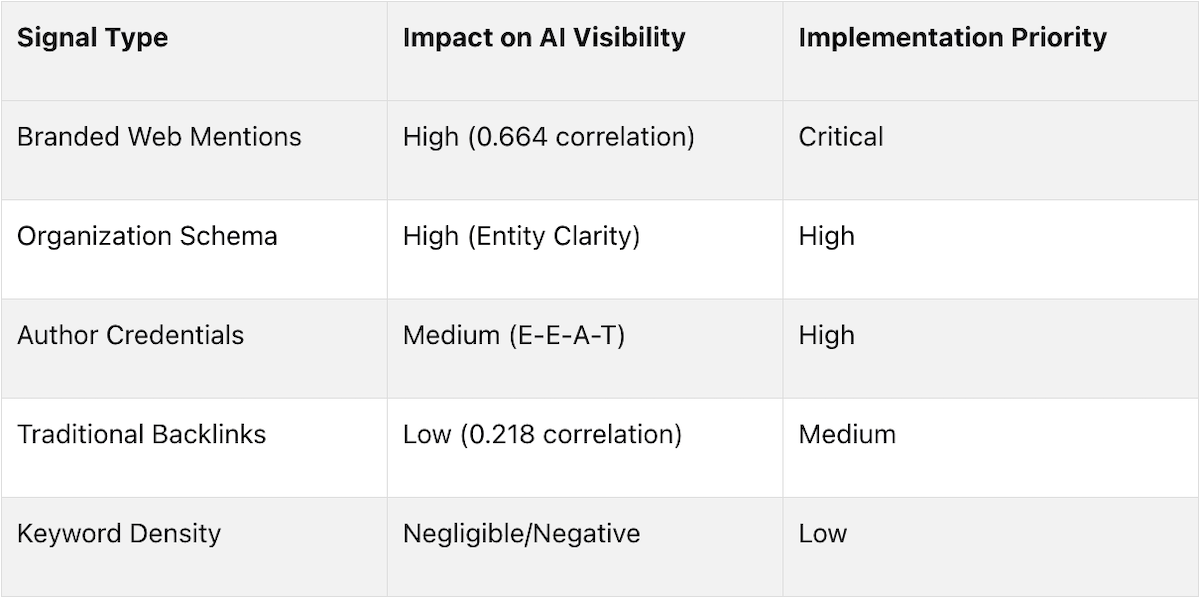
Traditional SEO vs GEO Optimization: Key Differences and Impact Metrics

When it comes to optimizing for navigational intent in Generative Engine Optimization (GEO), the goal is to make your brand unmistakable to AI systems. It's not just about getting crawled; it's about ensuring AI understands your brand as a distinct and authoritative entity. Here’s how you can make that happen.

Strengthen Branded Content Signals

Start with an entity audit using tools like Google's Natural Language API to assess how AI perceives your brand's sentiment and associations [6]. This will reveal whether your brand is recognized as authoritative or if there’s ambiguity to address.

Consistency is key. Always use your full brand name (e.g., "Hawke Media" instead of just "Hawke") to eliminate confusion and ensure proper attribution [7]. As NextAISEO puts it:

"In GEO, your job is to become the cleanest, most unambiguous paragraph the model can safely quote" [9].

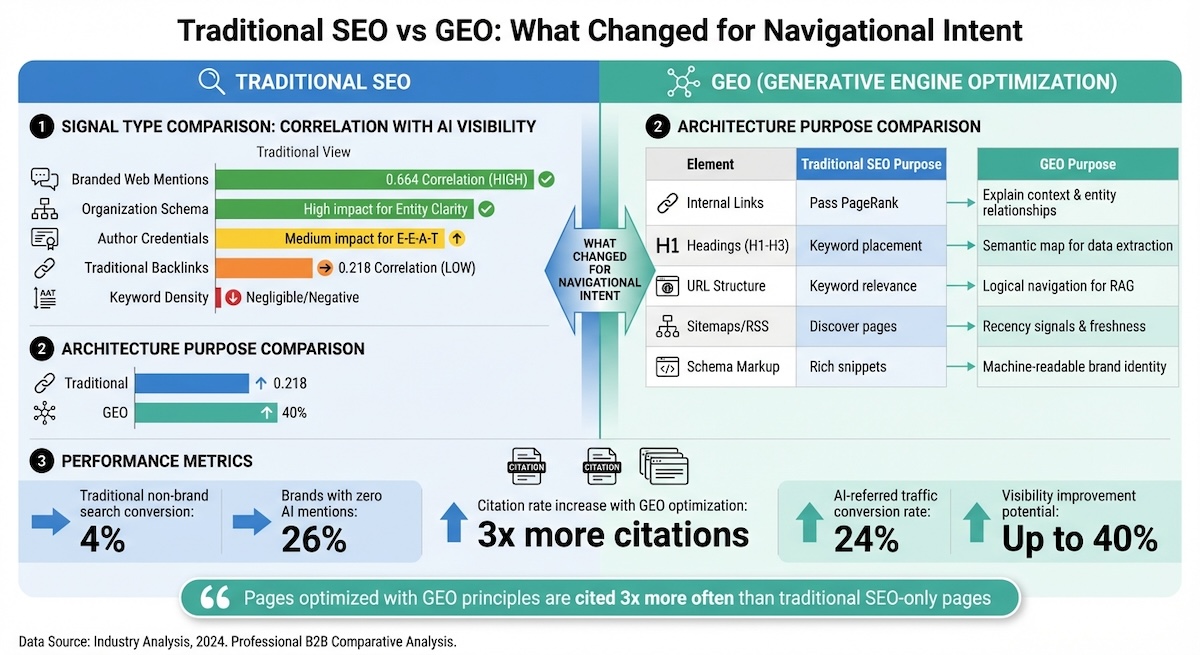
Branded mentions are more impactful than backlinks in GEO. Research shows that branded mentions have a 0.664 correlation with AI visibility, which is nearly three times stronger than the 0.218 correlation for traditional backlinks [8]. Aim to get mentions on platforms like Wikipedia, Reddit, Quora, and industry reports.

To enhance your E-E-A-T (Experience, Expertise, Authority, and Trustworthiness), link to detailed author profiles and verified credentials [8]. Use JSON-LD schema markup - such as Organization, LocalBusiness, and Author - to clearly define your brand’s name, services, and areas of expertise [7]. Schema markup is present on over 75% of top-performing GEO-optimized pages [8].

You can also create "citable moments" by structuring content with standalone summaries, unique stats, and brief brand definitions within the first 100 words of key pages. Adding inline citations can increase visibility by 30–40% [2].

Currently, 26% of brands have zero mentions in AI Overviews, with the top 25% dominating visibility [8]. By adopting these GEO-focused strategies, you could increase your visibility in generative answers by up to 40% [6].

Implement Clear Internal Linking

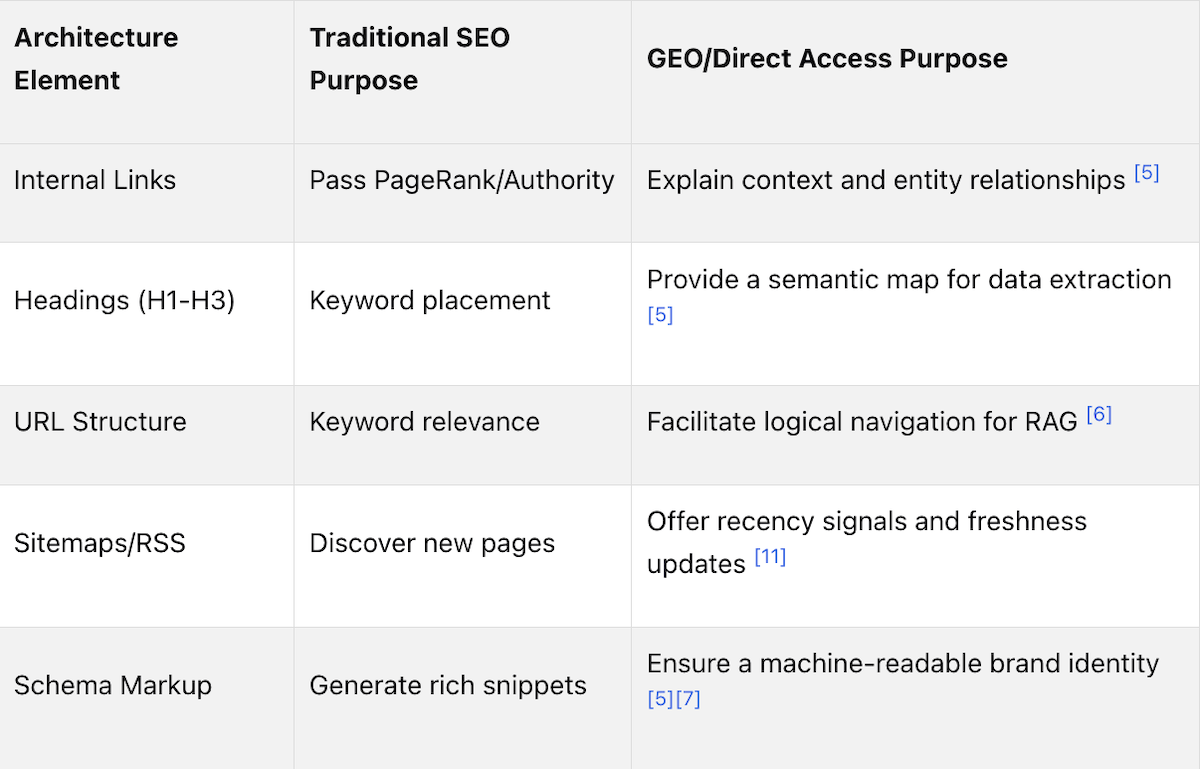
Internal links do more than pass PageRank - they clarify relationships between concepts for AI [5]. Use descriptive anchor text like "Learn more about schema markup" instead of generic phrases like "click here" [7]. As Interon notes:

"Internal link anchors should be descriptive. 'Learn more about schema markup' beats 'click here'" [7].

Build topic hierarchies by linking subtopics to pillar pages, creating an "expertise map" that signals authority to AI [10]. Generative models favor sites with logical internal linking, so aim to link 3–5 related articles per page. A "see also" approach, similar to Wikipedia, can enhance logical flow, and adding at least one contextual internal link per major section reinforces content importance [7]. These strategies can lead to a 0.5% increase in AI citation rates [3].

A well-structured internal linking system not only helps AI but also improves your site’s overall architecture.

Optimize Site Architecture for Direct Access

For AI to recommend your content, it must be accessible. Use server-side rendering (SSR) to ensure critical navigational content is readable by major AI crawlers like GPTBot [6]. Without it, your content might go unnoticed.

Organize your site with a clear semantic heading hierarchy and logical URL structures [5][6]. Group content into intent clusters - such as Definition, Process, Comparison, Troubleshooting, and Decision - and interlink them to establish topical authority [7].

Technical accessibility is also crucial. Avoid blocking user agents in your robots.txt file, resolve canonical URL issues, and maintain fast load times [6]. Adding RSS feeds for blog and news sections provides recency signals to AI and speeds up indexing [11]. You might even consider an llms.txt file to guide AI bots on how to interpret your content [6].

Pages optimized with GEO principles are cited three times more often than those relying solely on traditional SEO. Plus, AI-referred visitors convert at 24%, compared to just 4% for non-brand search traffic [3][1].

Improve Page Load Speed and Mobile Usability

Fast load times and mobile responsiveness are non-negotiable when it comes to AI signals [6]. Ensure your site is fully responsive and that key navigational pages load quickly across all devices. Poor mobile usability can hurt AI indexing and reduce content confidence.

Use Schema Markup for Entities

Schema markup is your shortcut to reinforcing brand identity. Use JSON-LD to implement Organization, LocalBusiness, and WebPage schema. This ensures AI can easily extract key details about your brand - like its name, services, and location - without having to infer them from unstructured text [2][5][7].

Advanced GEO Tactics for Navigational Queries

Once you've got the basics down, it's time to take your GEO strategy to the next level. These advanced methods fine-tune your approach, helping AI platforms recognize your brand as the go-to source for navigational queries. The goal? To make your content the definitive answer that AI confidently cites.

Build Entity Authority with GEO Clusters

Establishing authority starts with creating a strong knowledge network around your brand. Begin by conducting entity-first research - list your brand, products, key people, and related concepts. Use resources like Wikipedia, Wikidata, and industry glossaries to map out these connections [12][14]. This builds a framework similar to how AI models interpret relationships.

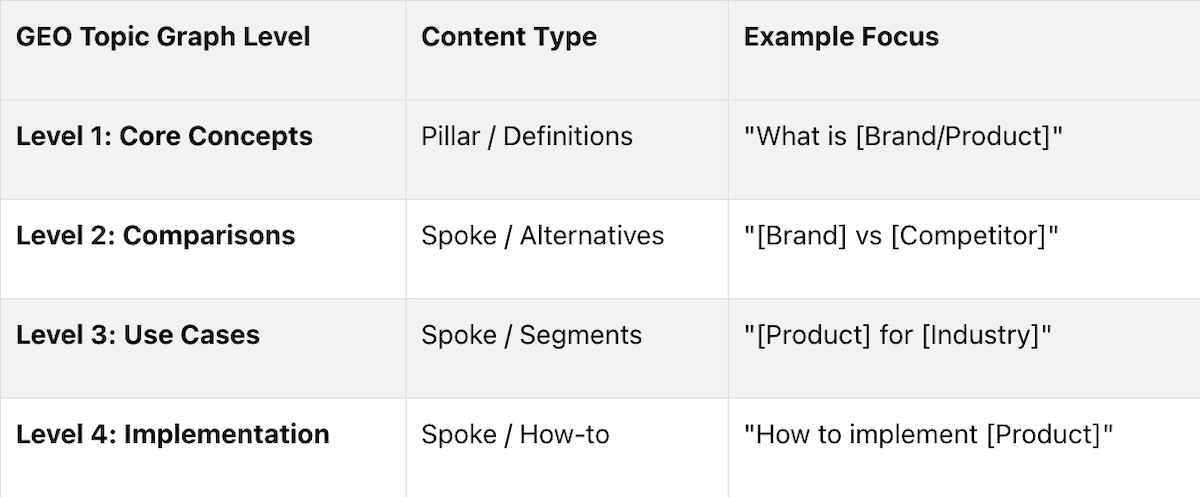
Organize your content into topic clusters with 12–30 supporting pages linked to a central pillar page [12][9]. For instance, if your pillar page is "What is [Brand Name]", supporting pages could include FAQs, tutorials, comparisons, and use cases. This structure reinforces your expertise and coherence in the eyes of AI systems.

Leverage schema properties like hasPart and isPartOf to connect pillar and spoke pages, and use ItemList schema to create machine-readable content hubs [14]. Designate a canonical entity home page for your brand and key authors. Include detailed descriptions and sameAs links to profiles on LinkedIn, Crunchbase, or Wikipedia [13].

Don't overlook E-E-A-T (Experience, Expertise, Authoritativeness, Trustworthiness). Assign content to authors with verified credentials, include professional bios with photos, and link bylines to detailed author pages [12][13]. AI systems heavily weigh these signals when determining credibility.

Keep your cluster pages fresh by updating them every 30–90 days with new stats and case studies [12][3]. Content freshness can contribute up to 40% of the ranking weight in some GEO models. Pages left stagnant for over 30 days may see a weekly citation drop of 2–3% [3].

Once your clusters are in place, it's time to focus on how AI responds to your content.

Monitor and Adapt to AI Response Patterns

Instead of just tracking keywords, shift your attention to query clusters - the conversational phrases people use with AI platforms [5]. Test 10–15 query variations manually by entering your branded and navigational questions into tools like Google AI Overviews, Perplexity, and ChatGPT. Document which sources these platforms cite [1].

Measure your progress with four key metrics:

  • AI Citation Share (ACS): How often AI platforms cite your content.
  • AI Answer Share (AAS): The percentage of answers featuring your brand.
  • AI Sentiment & Positioning: How your brand is portrayed.
  • Traffic/Conversion Lift: The impact of AI exposure on your site traffic and conversions [9].

Use analytics tools to isolate traffic from AI referrers like chatgpt.com, perplexity.ai, and claude.ai. Monitor metrics like session depth and lead quality to evaluate performance [1].

"GEO is not a set-it-and-forget-it checklist; it's a visibility flywheel you spin faster every quarter." - NextAI SEO [9]

Leverage tools like the Google AI Overview Impact Analysis Chrome extension to track cited sources and compare them to traditional search rankings [16]. Structure your H2 and H3 headings as natural language questions (e.g., "How does [Brand] compare to [Competitor]?") to align with AI retrieval patterns [5][1].

Stay relevant by refreshing high-traffic pages every 60–90 days. As AI models update their training data, maintaining "answer nugget density" - at least six concise, direct answers per 1,000 words - keeps your content competitive [15].

Integrate Lite Studio GEO Strategies

For businesses serious about dominating navigational queries, Lite Studio offers a structured, four-phase approach to GEO optimization. Starting at $2,000, their proprietary services focus on bolstering your brand's presence in AI-driven results:

  • Phase 1: Audit content and identify key navigational pages.
  • Phase 2: Optimize authority signals and content structure.
  • Phase 3: Test strategies on pilot content with technical QA.
  • Phase 4: Monitor and refine tactics based on AI citation metrics.

Lite Studio emphasizes entity strength optimization by conducting audits to assess how AI models perceive your brand. They ensure your brand appears in relevant prompts by implementing server-side rendering and JSON-LD schema (e.g., Organization, LocalBusiness) to create machine-readable identities.

Their methodology has delivered consistent visibility improvements of 30–40% across industries [17]. With AI-referred visitors converting at 24% - six times higher than the 4% conversion rate for traditional non-brand search traffic [1] - the potential ROI is substantial.

Measurement and Iteration

In GEO, precise tracking and regular updates are critical to keeping your content aligned with AI-driven search behaviors. Success in this area depends on monitoring AI citation and attribution signals, rather than just relying on conventional SEO metrics. One key question to ask: does your brand appear as the authoritative answer when users search for it directly? The following metrics offer a clear way to evaluate your GEO performance.

Track Key Metrics

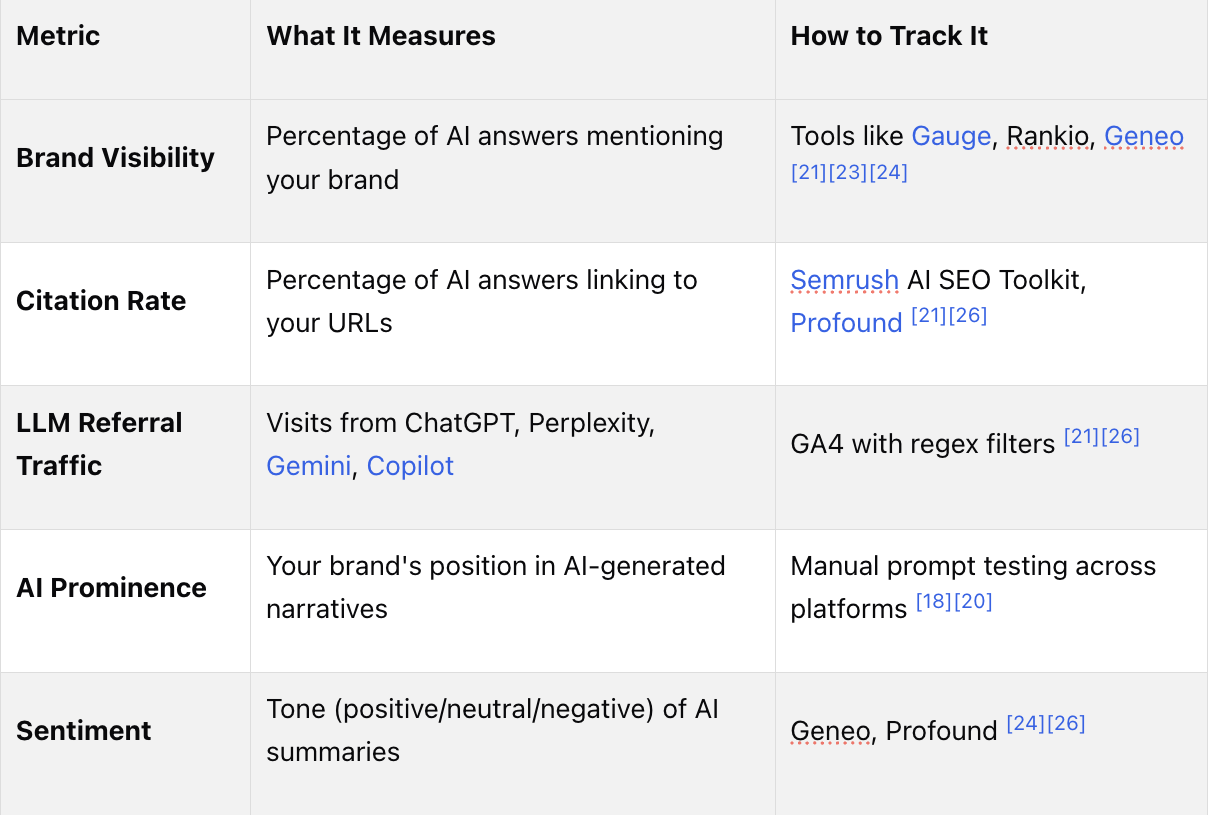
Start by keeping an eye on Brand Visibility - this measures how often AI-generated answers mention your brand for relevant navigational queries [21]. For instance, in February 2026, a European B2B SaaS company in the project management space boosted its Rankio Visibility Score from 12/100 to 50/100 (+317%) in just six weeks. This was achieved by adding structured data using Organization and FAQPage schema and creating a competitor comparison page. As a result, the company increased its AI Share of Voice from 3% to 19%, with the comparison page contributing 40% of new citations in ChatGPT and Perplexity [23].

Another essential metric is LLM referral traffic tracking, which can be set up in Google Analytics 4. Use regex filters such as openai|chatgpt|gemini|copilot|perplexity to isolate visits coming from AI engines [21][26].

Pay close attention to your AI Citation Rate - this tracks how often AI platforms explicitly credit or link to your site as a source [20][22]. For example, between December 2025 and February 2026, a healthcare information platform revamped its top 20 articles by adding TL;DR summaries, question-based H2 headings, and FAQ schema. Over 10 weeks, its Visibility Score jumped from 8/100 to 71/100, and its citation rate in relevant AI answers hit 70%. This effort led to a 12% increase in referral traffic from AI-driven search engines [23].

Don't forget about sentiment analysis. It’s important to monitor the tone of AI-generated summaries to ensure your brand is portrayed in a positive light [24][25]. Regularly audit 10–20 priority navigational queries using tools like Google AI Overviews, Copilot, and Perplexity. Log the cited sources and descriptions of your brand [13][24].

Before implementing GEO changes, document baseline metrics like organic traffic, brand visibility, and citation rates. Many brands that adopt GEO strategies notice measurable improvements in AI visibility within 3 to 6 weeks [23].

Iterate Based on Analytics

Once you’ve started tracking these metrics, use the data to fine-tune underperforming pages. Look for pages with high organic traffic but high bounce rates - this often means the content isn’t delivering the clear, direct answers users expect from search snippets [19]. Apply the Two-Sentence Test to see if these pages can stand alone as concise, helpful answers [5].

"Traditional SEO metrics explain less than 5% of AI citation behavior. Our analysis of 41M+ AI search results reveals that chunk retrieval frequency and embedding relevance scores are 300% more predictive of AI visibility than traditional ranking factors." – Waves and Algorithms Research Team [20]

Perform a gap analysis to find high-impact prompts where your brand isn’t being cited [18][20]. Focus on creating or updating content for these queries. Structure your H2 and H3 headings as natural language questions (e.g., "What makes [Brand Name] different?") to align with how AI systems retrieve information [5][1].

Regularly refresh high-traffic pages to signal content updates to AI platforms. Search engines like Google’s Search Generative Experience increasingly prioritize content updated within the last year [4]. Add fresh statistics, case studies, or examples to demonstrate relevance.

For a complete GEO analysis, supplement metric tracking with technical and behavioral insights. Monitor AI crawler activity in your server logs, looking for user agents such as GPTBot, Google-Extended, and CCBot. If key navigational pages aren’t being crawled, ensure they’re server-side rendered, as many AI crawlers don’t process JavaScript [21][6].

Finally, implement post-conversion surveys to capture insights from AI-originated leads. A simple question like "How did you first hear about us?" can help identify traffic that analytics might classify as direct [21]. With 73% of professionals under 35 starting their research on AI platforms rather than traditional search engines, this feedback is essential for understanding your true reach [1].

Key Takeaways for Navigational Intent Optimization

When it comes to optimizing for navigational intent in GEO, the approach shifts from traditional ranking strategies to creating content that serves as a complete answer. The aim isn’t just to make it to page one - it’s to become the go-to snippet that AI engines confidently cite. Each key page should have a concise section that directly and fully addresses the navigational query.

One essential tool for this is implementing JSON-LD schema, such as Organization, LocalBusiness, and FAQPage types. These provide AI with clear, machine-readable context. As OptimizeGEO puts it:

"Schema markup is your machine-readable identity card" [5].

Another critical aspect is creating a logical site structure with clear internal linking. Use topic clusters to connect pillar pages with related supporting content, ensuring you use descriptive anchor text. Pair this with precise brand names and specific terminology to highlight the depth and authority of your content [4][5]. This combination not only improves AI comprehension but also lays the groundwork for keeping your content relevant over time.

Speaking of relevance, maintaining content freshness is non-negotiable. GEO pages that aren’t updated within 30 days risk losing 2–3% of their citation rate every week [3]. To avoid this, regularly update high-value pages with new stats, case studies, or examples. This keeps your content appealing to Retrieval-Augmented Generation (RAG) systems and ensures its longevity [4][27].

FAQs

How do I know if AI understands my brand as an entity?

Want to know if AI systems recognize your brand as a distinct entity? Start by looking at how your brand shows up in AI-generated responses and search results. Pay attention to whether your brand is cited consistently, mentioned frequently, and associated with authoritative content across reliable sources.

To strengthen recognition, focus on strategies like using structured data and creating strong brand signals. Structured data helps AI understand your brand's key details, while robust brand signals - such as consistent messaging and high-quality content - boost your brand's relevance. This ensures AI systems can accurately assess and represent your brand within your industry.

What schema types should I add for navigational queries?

To make the most of navigational queries, consider using schema types like WebPage and Organization. These schemas help AI systems interpret your content more effectively, which can boost your chances of being cited. Pay close attention to how you structure your schema - ensure it clearly communicates your site’s purpose and highlights key details to improve visibility.

How can I track citations and traffic from AI tools in GA4?

To monitor traffic from AI platforms in GA4, you can create custom channel groups or apply regex rules to pinpoint visits originating from sources like ChatGPT or Perplexity. Another effective method is setting up exploration reports filtered by specific referrers. Additionally, adding UTM parameters to your links ensures better attribution. These approaches help you categorize AI-driven traffic, which often gets mislabeled as 'referral' or 'direct,' making it easier to analyze its influence on your website's performance.

Key Points

Why are branded mentions more important than backlinks for GEO success?

  • Branded mentions have a 3x stronger correlation with AI visibility compared to traditional backlinks, making them the most critical off-site signal for being cited in AI-generated answers.
  • AI platforms like ChatGPT and Google AI Overviews prioritize brands that are referenced across trusted third-party sites, such as Wikipedia and Quora.
  • 26% of brands have zero mentions in AI Overviews, while the top 25% dominate most citations—highlighting the competitive advantage of strong branded mentions.

How does schema markup enhance AI visibility and brand recognition?

  • Schema markup (especially JSON-LD for Organization and FAQPage) makes your content machine-readable and clarifies your brand’s identity for AI engines.
  • 75% of top-performing pages use schema markup, directly improving their chances of being cited in AI-generated responses.
  • Implementing schema for FAQs, reviews, and products ensures that AI systems can accurately extract and present your brand information.

What technical optimizations are essential for maximizing GEO performance?

  • Server-side rendering' is crucial - AI crawlers cannot process content loaded via JavaScript, so ensure all key information is present in the HTML.
  • Fast load times and mobile responsiveness are foundational for both traditional SEO and GEO, ensuring AI bots can efficiently access your content.
  • Logical site architecture with intent-based content clusters and descriptive internal linking helps AI understand content relationships and topical authority.

Which metrics should businesses track to measure GEO effectiveness?

  • AI Citation Share: Track how often your brand is cited in AI-generated answers compared to competitors.
  • Referral traffic from AI platforms: Monitor visits from sources like ChatGPT, Perplexity, and Gemini to gauge real business impact.
  • Conversion rates: AI-referred traffic converts at 24%, which is 6x higher than traditional search traffic - making it a key metric for ROI.
  • Brand mention accuracy: Regularly audit how AI systems describe your brand to ensure messaging is correct and favorable.

What are the most effective implementation strategies for GEO?

  • Audit your entity signals using tools like Google’s Natural Language API to ensure your brand is clearly defined across the web.
  • Consistently use your full brand name in all content and third-party mentions to avoid ambiguity.
  • Create “citable moments” by structuring content with standalone summaries, bullet points, and clear statistics that AI can easily extract.
  • Update key pages every 30–90 days to maintain freshness and maximize AI citation frequency.

How can businesses build and sustain GEO authority over time?

  • Build entity authority by developing comprehensive GEO clusters and leveraging schema properties across your site.
  • Monitor AI response patterns to identify which content and mentions drive the most citations, then adapt your strategy accordingly.
  • Engage on platforms AI references (like Reddit, Wikipedia, and industry forums) to increase the likelihood of being cited.
  • Benchmark against competitors by tracking share of voice and citation frequency, iterating your approach quarterly for continuous improvement.

Get Started

Streamline your online presence and captivate users with a refined, single or minimal page experience. Schedule a call with our team today to discuss how we can simplify your site and elevate your brand in just 30 days.

Schedule Call