Lite Studio Webclip

Simplify Your Website. Elevate Your Brand.

Schedule a call with our expert web design and answer engine optimization team today to discuss how we can improve search visibility and upscale your brand's online presence in just 30 days.

Schedule Call

Top Tools for Search Intent Mapping

Tom Rezendes
June 3, 2026
Ten search intent mapping tools evaluated across the four criteria that matter most at enterprise scale: intent labeling depth, workflow integration, U.S. market data coverage, and support for UX refinement. The right tool depends on whether you are optimizing rankings, refining architecture, or aligning content with what users actually want.

Article Summary

What is search intent mapping and why does it matter for enterprise content strategy?

Search intent mapping is the process of identifying the underlying goal behind a user's search query — whether they are seeking information, comparing options, ready to purchase, or navigating to a specific destination — and aligning content with that goal. For enterprises managing thousands of URLs across diverse user journeys, intent mapping determines which pages rank, which convert, and which compete against each other in ways that quietly suppress overall performance. Content that aligns with search intent can deliver up to four times higher conversion rates than content that misses the mark, making intent mapping one of the highest-return investments in an enterprise SEO workflow.

What are the four criteria that most reliably distinguish strong intent mapping tools from weak ones at enterprise scale?

The four criteria are depth of intent labeling — whether the tool goes beyond basic informational and transactional categories to identify mixed intent, cannibalization risk, and confidence scoring; enterprise-scale support including bulk processing, role-based access controls, and SSO compatibility; integration with analytics and UX workflows including connections to Google Search Console, GA4, CRM platforms, and content brief generation; and U.S. market data coverage that accounts for regional, device, and time-of-day variation in intent rather than relying on static global databases. A tool that excels in one or two of these criteria but underperforms in the others will create gaps in the intent-to-execution workflow that limit its practical value.

Which tools are strongest for large-scale keyword intent analysis and content clustering?

Ahrefs and Semrush are the strongest tools for large-scale keyword intent analysis and clustering. Ahrefs offers a database of over 2.5 billion U.S. keywords with AI-detected intent, Parent Topic clustering, and SERP Comparison for tracking intent drift over time. Semrush combines a 25-plus billion keyword database with machine-learning intent categorization at 85 percent-plus accuracy, SERP-based clustering through its Keyword Strategy Builder, and Personal Keyword Difficulty scoring that accounts for a domain's existing topical authority. Both integrate with GA4, CRM platforms, and content production workflows in ways that make intent data actionable rather than merely informational.

What makes Google Search Console uniquely valuable for intent mapping despite its limited labeling features?

Google Search Console provides first-party query data — actual clicks and impressions from real users — rather than the modeled estimates that third-party tools produce from scraped or licensed data. This makes it the only tool in the category that shows how pages actually perform in search results rather than how they are predicted to perform. Its intent gap analysis framework — measuring alignment between a page's content and the queries driving its impressions — produces a scored 0 to 100 alignment metric that identifies misaligned pages which are 63 percent less likely to rank in the top 10 even with strong backlinks. Its native integration with GA4, Google Ads, and Looker Studio makes it the cleanest analytics integration available in any intent mapping workflow.

How does Demandbase differ from the other tools and which organizations benefit most from its approach?

Demandbase operates at the account level rather than the keyword level — it identifies companies actively researching topics related to a product or service by linking IP addresses and bidstream data to a database of over 100 million companies, processing two trillion intent signals monthly. Rather than labeling individual keyword intent, it scores account-level intent as Low, Medium, or High based on how many individuals within a company are engaging with relevant content. This approach is specifically valuable for B2B organizations with long sales cycles and defined target account lists — it enables dynamic website personalization by company, industry, and intent stage rather than by anonymous traffic segment. SAP Concur used Demandbase to reduce its buying cycle from 157 days to 35 days by segmenting visitors by journey stage combined with first-party behavioral data.
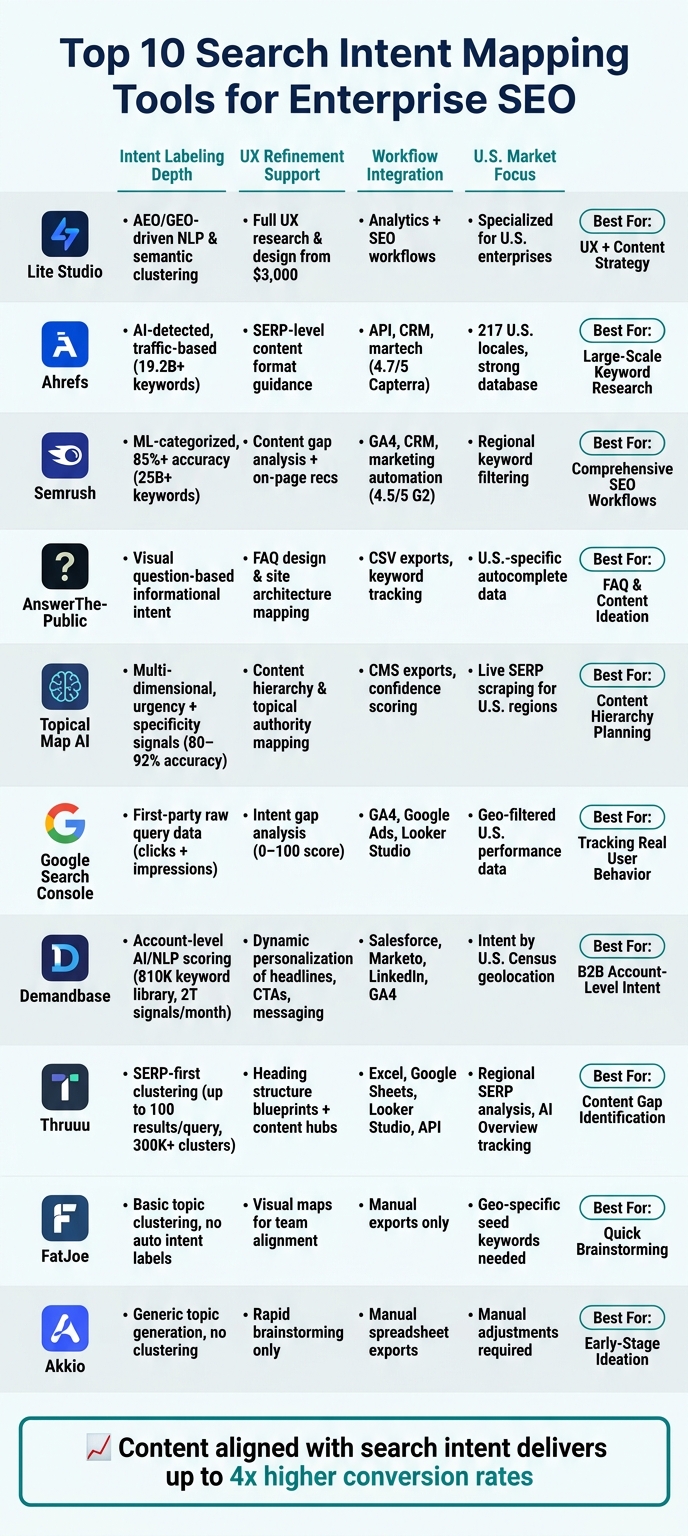
Search intent mapping helps align your content with what users are actually searching for, improving rankings, traffic, and conversions. This article highlights ten tools designed to help enterprises analyze and optimize search intent effectively, focusing on features like intent labeling, workflow integration, and U.S. market data. Here's a quick overview:

Key Tools and Features:

  • Lite Studio: Combines intent mapping with UX design for enterprise-level websites. Focuses on U.S. markets and AI-driven search trends.
  • Ahrefs: Offers extensive keyword data, intent clustering, and tools to monitor intent drift over time.
  • Semrush: Provides robust intent categorization, keyword clustering, and integration with analytics workflows.
  • AnswerThePublic: Visualizes user questions and helps identify decision-making stages.
  • Topical Map AI: Uses advanced NLP to map intent dynamically, factoring in urgency and audience specificity.
  • Google Search Console: Delivers first-party query data for intent gap analysis and performance tracking.
  • Demandbase: Focuses on account-level intent for B2B organizations, linking user behavior to business outcomes.
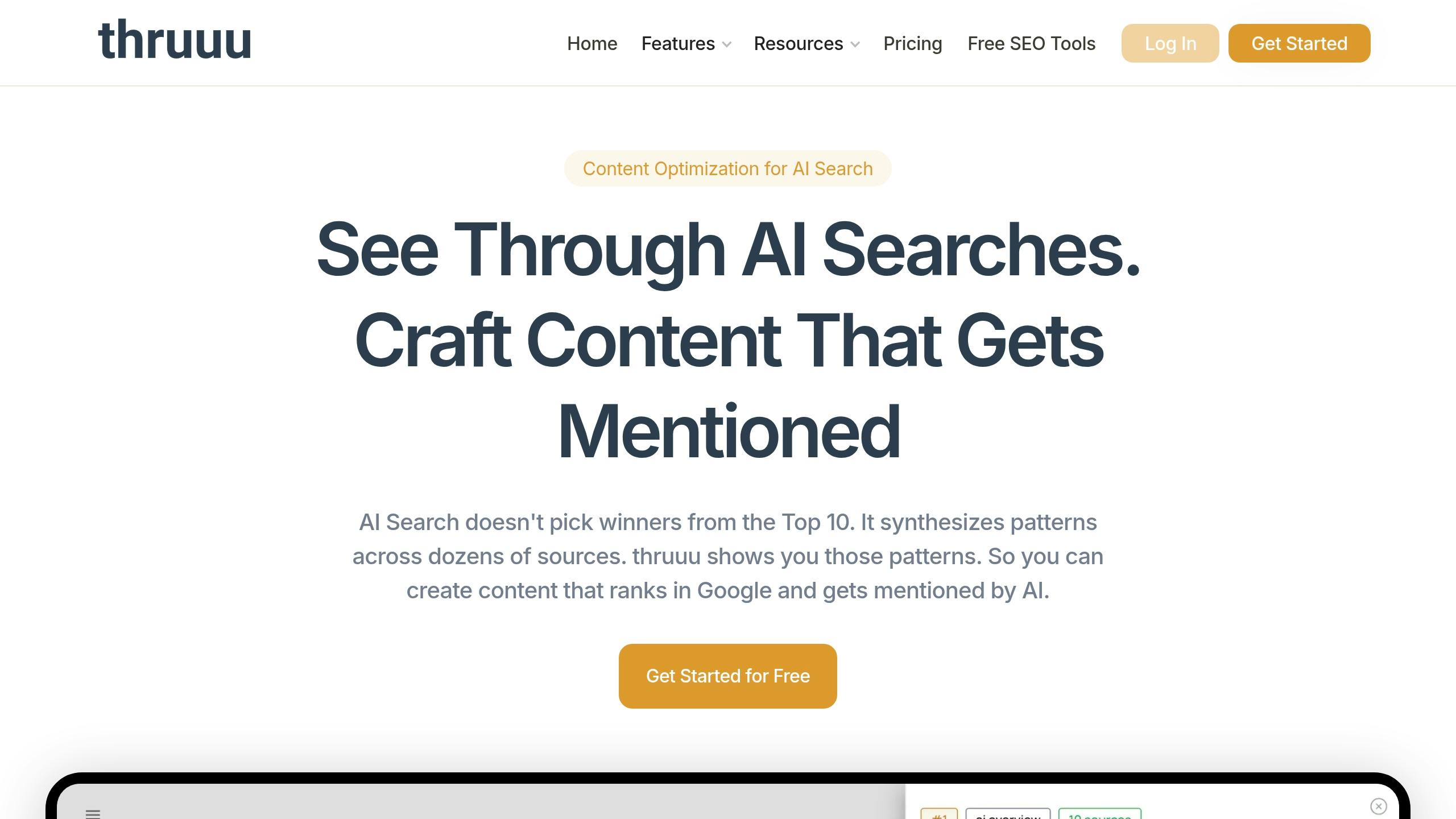
  • Thruuu: Analyzes SERPs deeply to uncover dominant content formats and clustering opportunities.
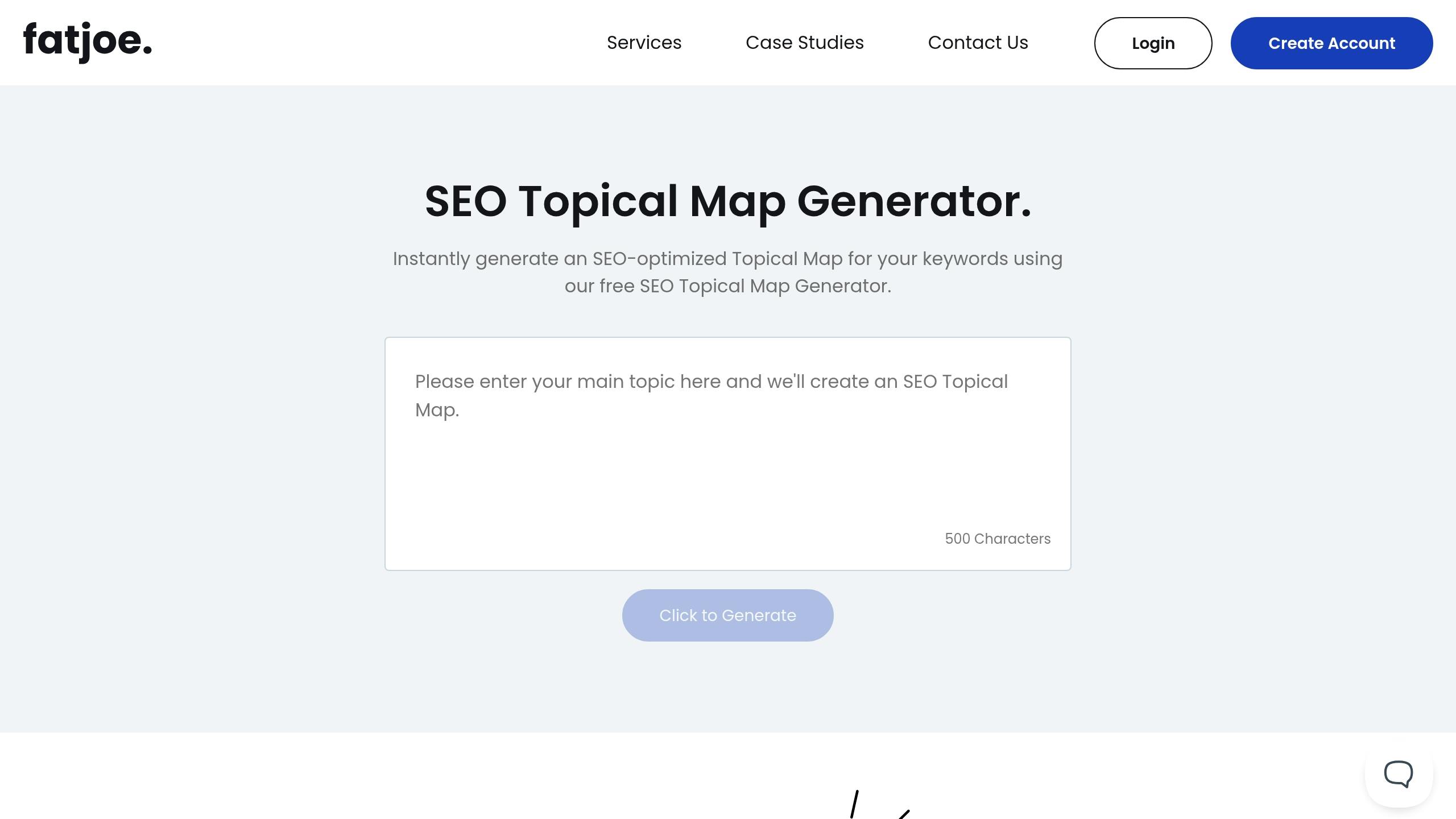
  • FatJoe Topical Map Generator: Simple tool for brainstorming content clusters.
  • Akkio Topical Map Generator: Budget-friendly option for generating raw topic ideas.

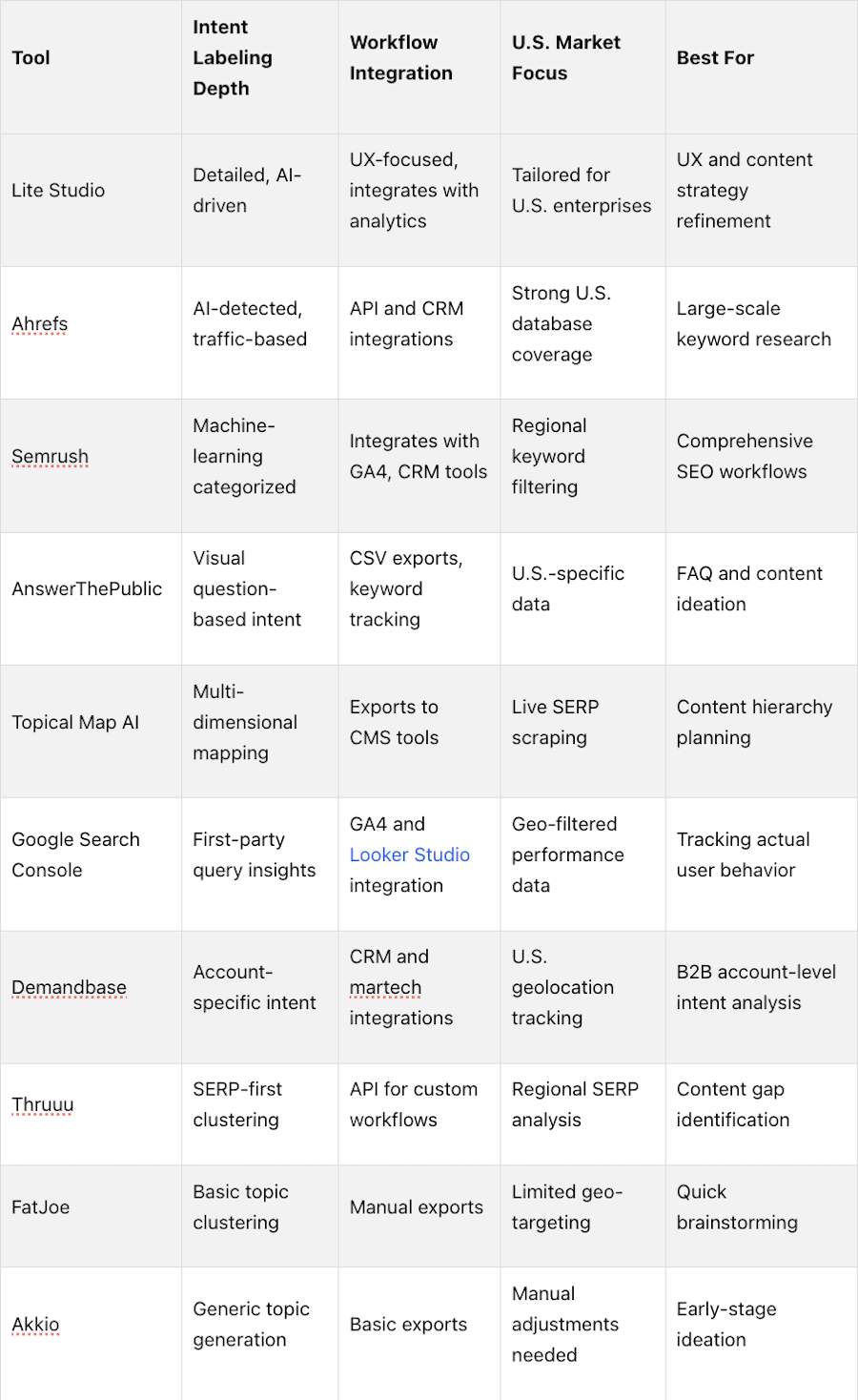
Quick Comparison

Each tool addresses different aspects of intent mapping, from SERP analysis to UX refinement. Choose based on your goals: whether it's improving rankings, refining UX, or aligning content with user needs.

Top 10 Search Intent Mapping Tools Compared

How to Find the Search Intent of Any Keyword (No More Guesswork)

How To Evaluate Search Intent Mapping Tools

Not all search intent mapping tools operate at the same level. While some excel at identifying keywords, they may fall short when it comes to understanding the deeper reasons behind a search. To address this, every tool in this list was assessed using four key criteria. These criteria tackle the main challenges enterprises face when mapping search intent.

1. Depth of Intent Labeling
A good tool goes beyond simply labeling keywords as "informational" or "transactional." The best tools dig deeper, identifying mixed or evolving intent, assigning confidence scores to ambiguous queries, and flagging potential internal competition. That last part - cannibalization - can quietly hurt rankings without obvious signs. If your content competes against itself, even the best SEO strategy can falter.

2. Enterprise-Scale Support
Large-scale organizations have unique needs. Managing thousands of URLs, coordinating across multiple teams, and adhering to strict data governance standards demand tools built for scale. Features like bulk keyword processing, role-based access controls, and single sign-on (SSO) compatibility are essential. A tool that works for a small 50-page website might buckle under the weight of a 50,000-page enterprise domain.

3. Integration with Analytics and UX Workflows
Insights are only as useful as their application. The top tools integrate seamlessly with platforms like Google Search Console, feed directly into content briefs, and map keywords to specific stages of the sales funnel. Why does this matter? Content aligned with search intent can deliver up to 4x higher conversion rates compared to content that misses the mark [3]. This kind of impact happens only when intent data flows directly into UX and content strategies, not when it's siloed in spreadsheets.

4. U.S. Market Data Coverage
For U.S.-based enterprises, accurate local data is critical. Search intent can vary dramatically based on location, device, and even time of day [4]. Tools relying on static global databases may fail to capture regional nuances or distinguish between general queries and location-specific searches, like "visit-in-person." Google's own Search Quality Evaluator Guidelines treat these as distinct intent types [5]. For businesses targeting regional audiences, overlooking these distinctions can lead to missed opportunities.

"Contextual factors like time, location, and device can also influence intent." - Carlos Silva, Editorial Lead, Semrush [4]

These four criteria guided the evaluation of every tool featured in this guide. Each recommendation was judged on its ability to address all four - not just the areas where it might naturally excel.

1. Lite Studio

Lite Studio takes search intent mapping to another level by merging UX design principles with intent research. Instead of just examining keyword data, it aligns intent research with content architecture. This approach is especially useful for large enterprises managing complex websites with diverse user needs.

Search Intent Labeling and Clustering

Lite Studio's process goes beyond analyzing search queries - it maps user intent across various interactions. It categorizes intent into core types (informational, commercial, transactional, navigational) while also identifying subtle, context-specific signals. This is particularly valuable for pages that need to serve users at different stages of their journey.

This detailed intent labeling lays the groundwork for meaningful UX improvements.

Enterprise-Level UX Refinement

Lite Studio specializes in turning intent data into practical design changes. Starting at $3,000, their UX research service combines analytics, expert input, and established best practices to reorganize information architecture. The result? Websites that better meet user needs, reduce friction, and improve task completion rates.

Seamless Integration With Analytics and UX Workflows

Lite Studio ensures intent data doesn't just sit in reports - it becomes part of the action. By integrating findings into content briefs, redesign projects, and testing workflows, it bridges the gap between research and execution. This includes optimizing mobile experiences and making page-level UX enhancements, all while considering regional variations in user intent.

Tailored for U.S. Markets

Lite Studio also focuses on geographic and behavioral differences in U.S. search intent. It distinguishes between general and local queries, which is crucial for targeting specific regions [6][7]. Their AEO and GEO services, starting at $2,000, address the growing importance of AI-driven and voice search queries, reflecting the shifting ways users interact with search engines today.

2. Ahrefs

Ahrefs provides an extensive toolkit for mapping search intent, offering a wealth of data that’s particularly valuable for complex websites. Its Keywords Explorer features a massive database of over 2.5 billion keywords just for the U.S. market [11], making it a go-to resource for detailed insights.

Search Intent Labeling and Clustering

Ahrefs simplifies search intent analysis with tools like "Branded" and "Local" attribute filters, perfect for campaigns targeting specific brands or geographic areas. The "AI Search Intents" feature goes a step further, breaking down traffic by intent percentages, so you can skip the guesswork. Additionally, the "Parent Topic" clustering tool organizes thousands of keywords under broader themes, automating a process that would otherwise take countless hours of manual work.

These features are game-changers for developing user-focused strategies, as demonstrated in its enterprise-level applications.

Support for Enterprise UX Refinement

Ahrefs helps businesses align their content with what users are actually looking for. A great example? The platform uncovered that users searching for "backlink checker" wanted a functional tool - not just an article. By adding a free tool to match this intent, the page saw a 516% jump in organic traffic within six months [9].

This aligns with the advice of Mateusz Makosiewicz, Marketing Researcher at Ahrefs:

"Fail to give searchers what they want, and your chances of ranking are slim to none." - Mateusz Makosiewicz [9]

The AI Content Helper adds another layer of support, comparing your content to top-ranking pages and highlighting gaps. This tool is especially useful when restructuring pages to better address user needs.

Integration With Analytics and UX Workflows

Ahrefs doesn’t just stop at intent discovery - it integrates seamlessly with enterprise analytics. The Ahrefs MCP (Model Context Protocol) connects Ahrefs data to tools like ChatGPT, Claude, and Copilot, enabling large-scale intent analysis and automated reporting. This means teams can work efficiently without overhauling their existing workflows. The Agent A integration acts as a virtual marketing assistant, simplifying bulk keyword research and content planning with access to Ahrefs’ vast dataset.

The SERP Comparison tool is another standout feature, allowing users to monitor intent drift - when Google’s understanding of a keyword changes over time. This ensures that updates to UX or content are based on the latest user behavior.

Localization and Data Coverage for U.S. Markets

Ahrefs supports research across 217 U.S. locales and over 173 languages [10][11]. With AI-powered translations in more than 40 dialects, U.S. businesses can easily tailor their content for multilingual audiences. The "Local" intent filter is particularly useful for identifying queries related to nearby services, a critical feature for enterprises with regional operations.

"Search intent is about optimizing content to match what the search results reward." - Despina Gavoyannis, Senior SEO Specialist, Ahrefs [8]

Pro tip: Use the SERP position history graph to evaluate the stability of a keyword’s intent before making big UX changes. If the graph shows low volatility, the intent is clear and consistent. High volatility, on the other hand, indicates that the intent might still be evolving.

3. Semrush

Semrush boasts one of the largest keyword databases in the industry, with over 27.8 billion keywords spanning 142 geo databases [14]. For enterprises managing extensive content libraries, this scale is a game-changer.

Search Intent Labeling and Clustering

Semrush utilizes a machine-learning algorithm to categorize every keyword into one of four intent types: Informational, Navigational, Commercial, or Transactional. It determines intent by analyzing SERP features, keyword modifiers like "how", "buy", or "near me", and branding signals [13]. With tools like the Keyword Magic Tool, users can filter keywords by intent, narrowing down millions of options to focus on high-conversion transactional terms.

What makes Semrush stand out is its SERP-based clustering. This approach groups keywords based on the actual URLs that Google ranks together.

"Semrush's Keyword Strategy Builder uses SERP-based clustering. It groups keywords by the actual pages Google ranks for them. This ensures your clusters reflect real user intent and search behavior, not just word relationships." - Luke Harsel, Product-led Content Lead, Semrush [17]

The Keyword Strategy Builder automates clustering for up to 2,000 keywords per list. It organizes pillar pages and subpages into a structured hierarchy, ensuring that keyword clusters align with real-world user behavior. This precise organization lays the groundwork for improving user experience (UX) across enterprise sites.

Support for Enterprise UX Refinement

Semrush provides tools like the Topical Overview Map, which visually displays relationships between keyword clusters. This is invaluable for UX and content teams when planning or redesigning site architecture. Before creating content, the SERP Analysis feature in Keyword Overview helps teams identify the format of top-ranking results - whether they’re listicles, product pages, or videos - so content can meet user expectations.

Another standout feature is Personal Keyword Difficulty (PKD%), which goes beyond generic difficulty scores. Instead, it evaluates how challenging it would be for your domain to rank based on its existing topical authority. For enterprise teams, this metric offers clear guidance on where to focus efforts for the best return on investment.

Integration With Analytics and UX Workflows

Semrush doesn’t stop at intent categorization - it integrates seamlessly with analytics workflows. Keyword clusters from the Keyword Strategy Builder can be sent to tools like the SEO Writing Assistant for content drafting or Position Tracking to monitor performance across related queries [15][17]. The Organic Traffic Insights tool connects with Google Analytics, uncovering "not provided" keywords and linking intent data to real organic performance [16].

Teams can also share keyword lists with controlled access or export data in CSV or XLS formats for use in external platforms, ensuring intent insights are easily incorporated into UX and analytics workflows [15][17].

Localization and Data Coverage for U.S. Markets

Semrush excels in localization, offering enterprise teams precise data for U.S. markets. For example, an October 2025 analysis revealed that commercial intent keywords accounted for 58.1% of organic visits to BestBuy.com [18]. Insights like these help teams prioritize their content strategies effectively.

The platform also tracks AI Visibility, measuring how often brands appear in Google AI Overviews. Since 88% of AI Overview-triggering searches are informational [19], this data helps teams identify content clusters at risk of zero-click outcomes and adjust their strategies accordingly. For local intent, the Semrush Local toolkit handles "near me" and city-specific queries, including Google Business Profile optimization [18], ensuring that localized content delivers a more relevant and impactful user experience.

4. Thruuu

Thruuu

Thruuu takes a distinct "SERP-first" approach to understanding search intent. Instead of focusing solely on keyword modifiers, it analyzes up to 100 Google results per query. This goes far beyond the typical 10–20 results most tools examine, offering insights into content length, heading structures, and the topics that Google seems to favor [21].

Search Intent Labeling and Clustering

Thruuu's "Summary & Intent" feature is at the heart of its analysis. It categorizes search intent into four main types: Informational, Navigational, Commercial, and Transactional. Beyond intent, it identifies the dominant content format for any query. For even more precision, it classifies the top 10 results by structure - such as tutorials, comparisons, case studies, or directories - drawing from over 19 distinct page formats [20]. This level of detail helps content teams align their strategies with what Google rewards.

When it comes to clustering, Thruuu uses URL overlap in Google results instead of relying on text similarity. This ensures clusters reflect actual search behaviors. Users can adjust the overlap threshold (between 4 and 10) to control how broadly or narrowly keywords are grouped. To date, Thruuu has created over 300,000 keyword clusters [22][23]. This precise clustering lays the groundwork for improving UX and streamlining workflows.

Support for Enterprise UX Refinement

Thruuu’s Mixed SERP view is a standout feature for UX teams. It compiles top-ranking results from all keywords in a cluster into a single view, making it easier to identify dominant content formats and spot competitive gaps across an entire topic [22][24]. UX teams can also use heading structures extracted from the top 100 results to create data-driven blueprints for optimizing content-heavy pages.

"For Google SERP analysis, page audits, and SEO insights, thruuu is one of our agency's go-to platforms. It's also an essential tool in the topic clustering process." - Tom Shapiro, CEO, Stratabeat [22]

Thruuu further simplifies internal linking and topic coverage by automatically mapping related clusters into content hubs and pillar page architectures. This makes it especially useful for enterprise teams managing large-scale content strategies [22].

Integration With Analytics and UX Workflows

Thruuu integrates smoothly into existing workflows with flexible export options. Users can export cluster data - including intent labels, SERP features, and domain visibility metrics - to Excel, Google Sheets, or Looker Studio [22][24]. For agencies, an API is available, allowing custom dashboards powered by 100-result search intelligence [23].

"thruuu transformed our ability to deliver GEO and SEO services at scale. What used to take our team days of manual analysis now happens in hours." - John McKusick, CEO, NextLeft [23]

Localization and Data Coverage for U.S. Markets

Thruuu supports data extraction from 196 countries and 151 languages [21], making it ideal for both national and regional U.S. strategies. Beyond standard SERP data, the tool tracks Google AI Overviews (AIO) by extracting source URLs and cited brands. This provides insights into the content structures that earn citations in AI-generated answers - a key advantage for U.S. businesses navigating the rise of AI-driven search [23][24].

5. AnswerThePublic

AnswerThePublic taps into real-time autocomplete data from platforms like Google, Bing, YouTube, Amazon, TikTok, Instagram, and AI tools such as ChatGPT and Gemini. It uncovers the latest questions users are asking, addressing the fact that about 20% of daily Google searches are entirely new queries [26][25].

Search Intent Labeling and Clustering

The tool’s standout feature is its keyword wheel, which visually organizes queries. High-volume terms sit at the center, while more specific, long-tail questions radiate outward. Queries are categorized into groups like Questions (who, what, why, how), Prepositions (for, with, near), and Comparisons (vs, like, or), helping teams quickly identify where users are in their decision-making process [27].

In the AI Models section, prompts from ChatGPT and Gemini are classified by intent - whether users are learning, comparing, or ready to act - and by sentiment (positive, negative, or neutral) [26]. This intent mapping is particularly useful for understanding behavior in AI-driven searches.

These visualizations not only clarify user intent but also provide actionable insights for improving user experience (UX).

Support for Enterprise UX Refinement

For UX teams, the tool shines by revealing the actual language users employ. Its People Also Ask integration pulls real question paths from Google’s SERP features, enabling the creation of detailed topical clusters [26]. Liam Porter, Head of Content at Salience, leveraged AnswerThePublic to identify common user questions for Dreams, leading to a 59% increase in long-tail keyword clicks (from 82,359 to 138,645) [28].

"The best use is analyzing the repeated themes within the questions provided and using that to inform content strategy... it helps provide real levels of content depth around the keywords we deem important." - Liam Porter, Head of Content, Salience [28]

Integration With Analytics and UX Workflows

Pro users can export data as CSV files for tools like Excel or Google Sheets and download high-resolution keyword wheels for presentations [29][30]. With Search Listening Alerts, teams receive weekly email updates on emerging questions within specific topics, making it easy to track changes in user intent without constant manual checks [30]. Shared folders and keyword lists organized by client or project streamline workflows for agencies managing multiple accounts [30].

"Research is the foundation of optimization recommendations that actually work and AnswerThePublic makes that research easier than any other tool on the market." - Kate Moore, Content Marketer, Precision Marketing Group [30]

Localization and Data Coverage for U.S. Markets

The tool supports 16 languages and allows country-level filtering, which is especially helpful for distinguishing U.S.-specific terminology from other English-speaking regions [27]. Using the Suggested For You feature, teams can input a website URL to generate a personalized content roadmap. This helps U.S. enterprises fine-tune their site structure to match real search patterns and address gaps in AI visibility [26].

6. Topical Map AI

Topical Map AI takes a fresh approach to understanding search intent. Instead of rigidly categorizing keywords into traditional buckets like informational, navigational, commercial, or transactional, it views intent as a fluid spectrum. This perspective accounts for different stages of the user journey and factors like urgency or budget, resulting in more precise clustering and content strategies [31].

Search Intent Labeling and Clustering

Using advanced NLP models alongside live SERP scraping, the tool assigns intent labels with confidence percentages. It also evaluates whether the audience is broad or niche and incorporates urgency signals to suggest the best content format for each cluster. Misaligned pages often underperform, while well-organized clusters see a 34% improvement in click-through rates compared to disorganized keyword groups [31][1].

"Traditional search intent mapping treats each keyword as having a single, static intent - but this oversimplified approach is killing your content strategy." - Megan Ragab, Founder of Topical Map AI [31]

A practical tip: manually review any keyword classification with a confidence score below 75%. Even the most advanced AI tools in 2026 only achieve accuracy rates between 80% and 92% [1].

Support for Enterprise UX Refinement

For enterprise teams, the platform distinguishes between "recurring habit signals" (content users revisit frequently) and "one-time task queries" (content consumed once). This differentiation guides decisions between creating serialized content or standalone pillar pages [1]. Each map comes with ready-to-use content briefs that include titles, target keywords, and meta descriptions. Users can tweak subtopics to ensure the final map aligns with their brand’s unique voice and goals.

Integration With Analytics and UX Workflows

Topical Map AI processes 800–1,200 keywords in about 60 seconds and offers multiple export options, including CSV, Excel, PDF, and Google Docs. It also supports a "Bring Your Own API Key" feature for OpenAI, helping users manage costs effectively [32]. These features ensure that intent insights integrate seamlessly into existing CMS platforms and project management tools.

"The best tool is the one your team actually uses. If intent classification outputs live in a separate platform from your content briefs, half your team will ignore them within a month." - Megan Ragab, CEO, Topical Map AI [1]

Localization and Data Coverage for U.S. Markets

The platform supports more than 20 languages and provides real-time data on search volume, difficulty, and competition for over 25 countries through DataForSEO [32]. For U.S.-focused projects, its live SERP analysis includes features like Featured Snippets, Local Packs, and People Also Ask boxes. This ensures intent mapping reflects current, localized search trends rather than outdated averages [31]. It also handles highly specific local queries, such as "plumbing services in Denver" [32]. To keep up with seasonal changes and algorithm updates, it’s recommended to refresh intent maps quarterly [1][31].

7. FatJoe Topical Map Generator

FatJoe Topical Map Generator

FatJoe Topical Map Generator is a simple yet effective tool for brainstorming topic ideas. While it doesn’t dive deep into analysis, it excels at quickly creating visual representations of topic structures. By generating subtopic lists and clusters from a seed keyword, it’s perfect for teams looking for fast ideation rather than detailed research.

Search Intent Labeling and Clustering

Unlike more advanced platforms, FatJoe doesn’t automatically label search intent or provide confidence scores for queries. You won’t see categories like "informational" or "transactional" assigned to keywords. Instead, it uncovers micro-niches and alternative angles that are often missed during traditional keyword research. These insights are especially handy for creating FAQ sections or crafting prompts for AI-driven content.

"In an AI-first world, having several fast ways to reframe a topic is valuable. These tools give alternative structures you can merge into stronger prompts, topic maps, and FAQ sets for AI and SEO." - Waqas Arshad, B2B SaaS SEO Agency [33]

A practical tip: after using your main keyword research tool, run the same seed topic through FatJoe. This secondary step often reveals smaller clusters or overlooked subtopics that can add depth to your content strategy.

Support for Enterprise UX Refinement

FatJoe shines as a collaboration tool in the early stages of a project. Its visual maps are easy to share with non-SEO team members, making it a great way to align everyone on the topic structure. However, it’s not designed for in-depth tasks like long-term topic management or identifying content gaps.

Integration With Analytics and UX Workflows

FatJoe doesn’t integrate directly with analytics platforms or CMS tools. You’ll need to manually export its outputs into planning documents or spreadsheets. While this adds an extra step, it also means there’s no complicated setup. Within minutes, you can generate a map and include it in a content brief.

Localization and Data Coverage for U.S. Markets

FatJoe doesn’t offer built-in geo-targeting or localized SERP data. To tailor it for U.S. market research, use geo-specific seed keywords like "HVAC repair Chicago" instead of general terms like "HVAC repair." Although it won’t replace tools with live local SERP analysis, it’s still useful for identifying region-specific subtopics in the planning phase. The tool is available in both free and freemium versions, though map generation has limits.

8. Akkio Topical Map Generator

Akkio

Akkio is a no-code AI platform designed to help users generate topical maps by processing seed keywords. It quickly creates a bulleted list of related topics, making it a budget-friendly option for early-stage idea generation[34]. However, it’s more of a customization tool than a full-fledged SEO solution, offering raw ideas that need further refinement.

Search Intent Labeling and Clustering

Akkio provides a straightforward list of related topics but lacks features like automatic intent labeling, confidence scores, or clustering. This means users will need to manually edit and organize the topics before they’re ready for use[34].

Support for Enterprise UX Refinement

The platform’s generic outputs work well for rapid prototyping in early brainstorming sessions. However, since it doesn’t account for specific brand or audience contexts, it’s less effective for teams with clearly defined content strategies or user personas[34].

Integration With Analytics and UX Workflows

Akkio's outputs aren’t designed to integrate directly with tools like rank trackers, CMS platforms, or keyword databases. Users need to manually export the data into spreadsheets or other planning documents. This makes Akkio most useful as a quick brainstorming tool that complements more advanced platforms later in the process[34].

Localization and Data Coverage for U.S. Markets

Akkio supports multilingual topic generation, including English tailored for U.S. audiences. However, the results are generic and require manual adjustments to ensure they align with regional needs. For U.S. markets, users will need to fine-tune the topics to ensure they’re locally relevant[34].

9. Google Search Console

Google Search Console

Google Search Console (GSC) is a free tool from Google that gives you direct insight into the exact search queries people use before they land on your site. Unlike third-party tools that provide keyword estimates from scraped data, GSC delivers real-world data - showing how your pages actually perform in search results [41].

"Google Search Console captures what your audience searches for when they find each page... One is demand. The other is positioning." - Michael Levitz, Co-founder, Forecast.ing [36]

Search Intent Labeling and Clustering

While GSC doesn't explicitly label search intent like some SEO tools, its Insights report uses AI to differentiate branded queries from non-branded ones. This distinction can act as a helpful way to separate navigational intent from informational or commercial intent [37][39]. For larger websites, GSC automatically clusters queries, making it easier to analyze intent patterns across multiple pages. Keep an eye on your CTR - if impressions are high but clicks are low, it might signal that the content doesn't match user intent [38].

Enhancing UX Through Intent Gap Analysis

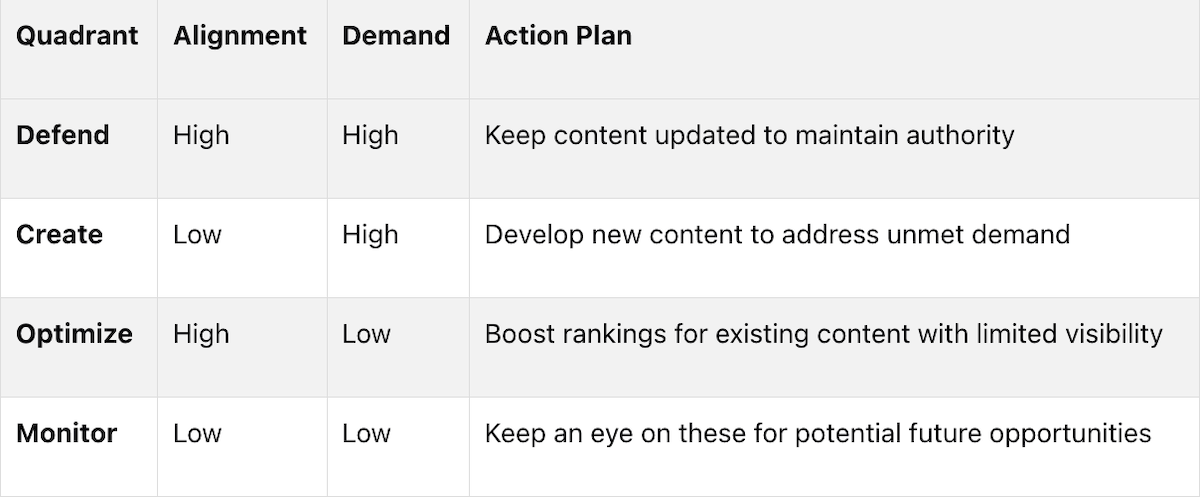
GSC’s query data is a powerful resource for improving user experience. It supports a method called intent gap analysis, which measures how well your page’s content (like meta descriptions) aligns with what users are searching for. This alignment is scored from 0 to 100 [36]. To make this actionable, queries can be categorized into four distinct quadrants:

Misaligned pages - those that don’t match the dominant search intent - are 63% less likely to rank in the top 10, even with strong backlinks and on-page optimization [1]. This quadrant framework helps convert intent data into clear, actionable steps for enterprise teams, ensuring UX and content decisions are driven by real user needs.

Integration With Analytics and UX Workflows

GSC integrates seamlessly with Google BigQuery, which is ideal for storing and analyzing large datasets [40]. This makes it easy to incorporate GSC data into broader UX strategies. Additionally, GSC’s query data works well with semantic clustering tools, which group queries by meaning rather than exact wording. This is especially useful for identifying issues like keyword cannibalization, where multiple pages compete for the same search intent [41][2].

For UX refinement, filtering by device type is especially helpful. For example, if mobile CTR is significantly lower than desktop for the same query, it’s likely a UX issue on mobile rather than a content mismatch [38].

Regional Insights for U.S.-Focused Strategies

GSC also supports regional optimization, which is crucial for U.S.-focused businesses. Its Performance report allows filtering by country and device, letting teams isolate U.S. query performance from global data [35]. This is particularly important when search intent differs by region. For example, a query that performs well nationally might not resonate in specific states or cities. Pairing GSC with tools that track local modifiers (like city names) can help fine-tune strategies for local search visibility [41].

10. Demandbase

Demandbase

Demandbase takes a unique approach to search intent mapping by zeroing in on account-level intent - essentially identifying companies that are actively exploring topics connected to your product or service. It achieves this by linking IP addresses and bidstream data to a database of over 100 million companies. The platform processes an astonishing 2 trillion intent signals monthly and tracks over 70 billion daily page views [43].

Search Intent Labeling and Clustering

Using AI and natural language processing (NLP), Demandbase goes beyond basic keyword matching. Its NLP engine analyzes the actual text on web pages to understand the context behind an account's research. For instance, it can differentiate between casual browsers and serious buyers investigating terms like "oil field suppliers" [45].

Intent is then scored as Low, Medium, or High, based on how many individuals from a company are engaging with relevant content. For example, if a company with 1,000–5,000 employees has 19 or more people reading related material, it triggers a High intent score [45]. This process is powered by a keyword library containing 810,000 terms, and the AI can even expand user-defined keyword sets to identify related signals [43][44]. This precise scoring system helps tailor UX strategies to meet specific account needs.

Support for Enterprise UX Refinement

Demandbase stands out for its ability to dynamically personalize website experiences based on account-level research. It enables teams to adjust headlines, CTAs, case studies, and product messaging to align with a visitor's industry, company size, or intent topic [42][46].

A great example is SAP Concur, which used Demandbase to segment visitors by their journey stage and first-party behavioral data. The result? A 4× increase in funnel velocity, cutting the buying process from 157 days to just 35 [48].

"Demandbase allowed us to create segments based on journey stage combined with our own first-party behavioral data." - Lindsay Hasz, Director of Insights and Optimization, SAP Concur [48]

Integration With Analytics and UX Workflows

Demandbase integrates seamlessly with GA4 through its Demandbase Tag and Google Tag Manager, automatically populating 12 firmographic attributes - such as Company Name, Industry, City, State, and Revenue Band - as custom dimensions [47]. This integration allows UX and analytics teams to filter GA4 reports by specific company attributes, focusing on account-level insights rather than anonymous traffic data.

Additionally, Demandbase connects with platforms like Salesforce, Marketo, LinkedIn, and review sites such as G2, providing a unified view of each account's buying journey [48]. These integrations offer a streamlined way for teams to align their analytics and UX strategies.

Localization and Data Coverage for U.S. Markets

For teams targeting U.S. audiences, Demandbase offers Intent by Geolocation, which maps intent signals to specific U.S. Census regions and divisions [47]. With the ability to track over 3.7 billion IP addresses and support for 133 languages, the platform is particularly effective for North American markets [43].

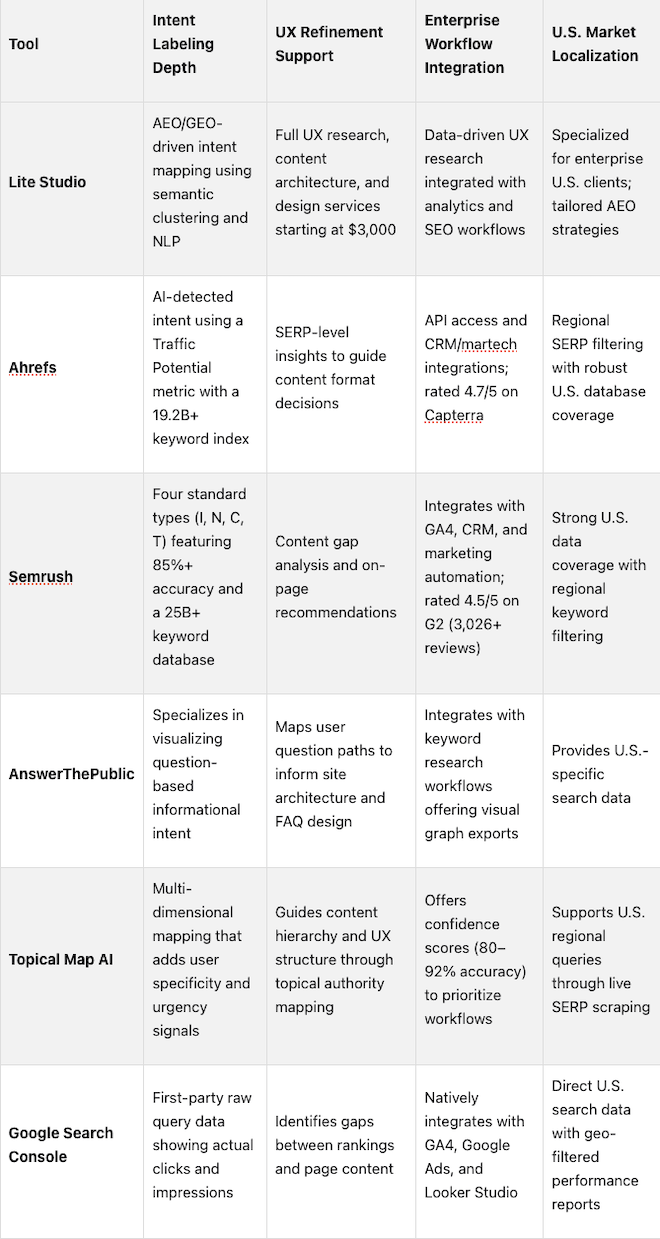
Comparison Table

The table below highlights how various tools tackle search intent mapping across four important criteria. Each tool's approach reflects its focus on addressing enterprise needs for intent mapping and improving user experience.

Semrush stands out with its massive 25B keyword database, while Ahrefs employs a click-based Traffic Potential metric for intent detection. Google Search Console, on the other hand, provides unmatched access to actual user behavior instead of relying on modeled predictions [12]. These distinctions can help you decide which tool best fits your goals for refining search intent mapping and enhancing user experience.

"Intent mapping goes far beyond surface level user behavior. It's about decoding the deeper motivations and expectations that drive engagement on your website." - Maxine Bremner, Head of Content, Hive19 [49]

Conclusion

Mapping search intent effectively requires a seamless workflow that combines various specialized tools. These industry-standard intent mapping solutions go beyond basic keyword research by uncovering user behavior patterns and question-based intent often overlooked. This process lays the groundwork for a skilled execution partner to transform intent data into actionable UX enhancements.

The real challenge for most enterprises isn't gathering data - it's putting that data into action. Understanding that a user has commercial intent doesn't automatically lead to a high-performing page layout, well-placed CTAs, or a content structure that converts. That’s where Lite Studio (lt.studio) steps in. They specialize in turning intent signals into streamlined, user-focused web designs rooted in AEO and GEO principles. For example, Lite Studio excels at simplifying complex websites into intuitive experiences, which is critical given that nearly 60% of U.S. searches now result in no clicks [51].

"Lite has helped us to completely transform our web presence and SEO results. They are excellent partners and have become a trusted source for us tackling everything from simple to complex website builds." - Dave Herman, General Indemnity Group [50]

This end-to-end approach - identifying user intent and continuously refining the user experience - is the cornerstone of an effective digital strategy. When content aligns with user intent, it can lead to a 4x increase in conversion rates [3]. For enterprise SEO and UX teams, adopting a structured, intent-driven workflow is one of the smartest moves they can make.

FAQs

How do I map keywords to the right stage of the funnel?

To effectively map keywords to the correct stage of your marketing funnel, you need to understand their search intent. Keywords typically fall into one of three categories: informational, transactional, or commercial.

  • Informational keywords: These are perfect for the awareness stage. Users searching these terms are looking for knowledge or answers, not ready to make a purchase yet. For example, "What is SEO?" or "How to start a blog."
  • Transactional keywords: These align with the decision or purchase stage. They indicate that the user is ready to take action, such as "Buy running shoes online" or "Best deals on laptops."

To classify intent accurately, you can use tools like SERP analysis or pull data from platforms like Google Search Console. By doing this, you ensure your content meets user needs at every stage of the funnel, boosting both engagement and conversions.

How can I spot “intent drift” before rankings drop?

Use tools such as the Topical Drift Analyzer to spot when your content or internal links are sending mixed signals. These mixed signals can cause your content to lose its topical focus, which might confuse search engines. By identifying shifts in user intent or misaligned content early, you can tweak your strategy and prevent potential drops in rankings.

How often should I refresh my search intent map?

It's a good idea to revisit and update your search intent map on a regular basis. User behaviors and search engine signals can shift over time, and keeping your map current helps you stay aligned with these changes. Many experts recommend reviewing and refreshing it every quarter to ensure your strategies stay effective and relevant to the latest trends.

Key Points

Why does search intent mapping produce disproportionate returns for enterprise SEO programs compared to standard keyword research?

  • Standard keyword research identifies what users search for; intent mapping identifies why — and the why is what determines whether a page ranks, converts, and retains users or performs adequately on all three metrics while delivering none of the business outcomes the content was created to drive.
  • Misaligned pages are 63 percent less likely to rank in the top 10 even when they have strong backlinks and on-page optimization — meaning that technical SEO excellence cannot compensate for content that does not match the dominant intent of the query it targets. Intent alignment is the prerequisite that makes other SEO investments productive.
  • Content aligned with user intent can deliver up to four times higher conversion rates than content that misses the mark — a multiplier that compounds across every page in a large content library and makes intent mapping one of the highest-return line items in an enterprise SEO budget.
  • Keyword cannibalization — where multiple pages compete for the same intent — is a systematic performance suppressor in large content libraries that standard keyword research does not identify and that intent mapping specifically surfaces. Without intent-level analysis, cannibalization persists invisibly while depressing rankings across multiple URLs simultaneously.
  • Intent drift — when Google's understanding of a keyword's dominant intent changes over time — requires ongoing monitoring that keyword research performed at a point in time cannot provide. Tools like Ahrefs' SERP Comparison and Semrush's Position Tracking address this as an ongoing workflow rather than a one-time audit.
  • The enterprise-scale challenge is not identifying intent but operationalizing it — moving from intent classification in a tool to content briefs, UX decisions, architecture changes, and performance tracking in an integrated workflow. The tools that produce the most value are those whose outputs connect directly to the systems where content and design decisions are made.

How do Ahrefs and Semrush compare as enterprise intent mapping platforms and what determines which is the stronger choice for a specific organization?

  • Ahrefs' most distinctive intent mapping feature is its AI Search Intents capability, which breaks down traffic by intent percentage rather than assigning a single label to a keyword — reflecting the reality that many queries carry mixed intent that single-label classification systematically misrepresents. This nuance is particularly valuable for keywords that perform differently across device, location, and time of day.
  • Semrush's SERP-based clustering through its Keyword Strategy Builder groups keywords by the actual URLs Google ranks for them rather than by text similarity — ensuring that clusters reflect real search behavior rather than semantic proximity. This distinction produces clusters that align with how Google actually interprets user intent rather than how the tool's algorithm predicts it would.
  • Ahrefs' SERP Comparison tool for monitoring intent drift'is a workflow capability that Semrush does not directly replicate — it allows teams to evaluate whether a keyword's intent is stable enough to justify a major UX or content investment, or whether the SERP volatility indicates an evolving understanding that makes any optimization investment premature.
  • Semrush's Personal Keyword Difficulty metric accounts for a specific domain's existing topical authority rather than applying generic difficulty scores — producing prioritization guidance that reflects the actual competitive position of the organization rather than the average competitive landscape. For enterprises with established topical authority in specific verticals, this distinction changes which keywords are genuinely winnable.
  • Both platforms integrate with GA4, CRM tools, and content production workflows but through different mechanisms — Ahrefs through its MCP connection to AI assistants including Claude and ChatGPT for automated intent analysis at scale, and Semrush through its Organic Traffic Insights connection to Google Analytics that surfaces "not provided" keywords and links intent data to actual organic performance.
  • The choice between Ahrefs and Semrush for intent mapping is most reliably made on the basis of which platform's clustering methodology best matches the organization's content architecture approach — SERP-based clustering for organizations that want their content structure to mirror how Google groups pages, or AI-detected traffic-based intent for organizations that want to understand how different intent segments contribute to total traffic rather than which intent a keyword primarily represents.

What role does Google Search Console play in an enterprise intent mapping workflow and what unique capabilities does it provide that third-party tools cannot replicate?

  • First-party query data is Google Search Console's irreplaceable advantage — it shows actual clicks and impressions from real users on real queries, rather than the estimated search volumes and modeled intent labels that third-party tools derive from scraping, panel data, or licensed keyword databases. The gap between estimated and actual query performance is frequently significant enough to alter strategic priorities when GSC data is introduced.
  • The intent gap analysis framework enabled by GSC query data — scoring alignment between a page's content and the queries driving its impressions on a 0 to 100 scale — converts first-party performance data into a prioritized action list that distinguishes between pages where intent alignment should be defended, where new content should be created, where existing content should be optimized, and where performance should simply be monitored.
  • The quadrant framework for GSC query categorization — Defend for high alignment and high demand, Create for low alignment and high demand, Optimize for high alignment and low demand, and Monitor for low alignment and low demand — converts intent data into clear, differentiated action plans rather than uniform recommendations that apply the same optimization logic regardless of a page's performance position.
  • Device-type filtering in GSC for UX intent analysis identifies situations where mobile CTR is significantly lower than desktop CTR for the same query — a pattern that indicates a UX problem on the mobile experience rather than a content-intent mismatch, and that directs remediation toward design rather than content changes.
  • GSC's integration with Google BigQuery enables storage and analysis of large historical query datasets that exceed what the GSC interface itself can display — making it the appropriate platform for enterprise-scale longitudinal intent analysis that tracks how query performance evolves across algorithm updates and seasonal patterns.
  • Semantic clustering of GSC query data identifies keyword cannibalization by grouping queries by meaning rather than exact match — surfacing situations where multiple pages are competing for the same user intent in ways that suppress both pages' performance, and providing the first-party performance evidence that makes the cannibalization case to stakeholders who require data rather than analysis.

How do Thruuu and AnswerThePublic address the intent mapping challenges that database-driven tools leave unresolved?

  • Thruuu's SERP-first methodology analyzes up to 100 Google results per query — five to ten times the result set that most tools examine — producing content format and structure intelligence that keyword databases cannot derive because it requires reading the actual pages Google rewards rather than modeling intent from keyword characteristics and modifiers.
  • URL overlap clustering in Thruuu groups keywords based on which pages Google ranks for multiple queries rather than on text similarity between keywords — a methodology that produces clusters which reflect Google's actual content grouping logic rather than the tool's interpretation of semantic relationships. The resulting clusters are more reliable predictors of content strategy success because they are validated by live SERP behavior.
  • Thruuu's Mixed SERP view compiles top-ranking results from all keywords in a cluster into a single interface — enabling UX teams to identify dominant content formats and competitive gaps across an entire topic rather than query by query, which is the analytical efficiency advantage that makes it practical for enterprise content strategy at scale.
  • AnswerThePublic's keyword wheel visualization maps the actual language users employ across the full decision-making journey — questions, comparisons, prepositions — in a format that reveals where users are in their process and what specific information they are seeking at each stage, enabling content architecture decisions that standard keyword research produces no equivalent insight for.
  • AnswerThePublic's AI Models section classifies prompts from ChatGPT and Gemini by intent and sentiment — providing intelligence about how users approach AI-driven search that no SERP-based tool can capture because AI search responses do not appear in Google's results. For organizations developing AEO strategies, this capability addresses a growing blind spot in traditional intent mapping.
  • The complementary role of Thruuu and AnswerThePublic in an enterprise workflow is most productive when each is used at the stage where its methodology has the greatest advantage — AnswerThePublic for early-stage ideation and understanding user language across decision stages, and Thruuu for SERP-validated clustering and content format specification at the point where structure and format decisions are being made.

What distinguishes Topical Map AI, Demandbase, and Lite Studio as specialized intent mapping solutions and which organizational contexts are each best suited for?

  • Topical Map AI's multi-dimensional intent classification — treating intent as a spectrum that incorporates user specificity, urgency signals, and audience breadth rather than assigning a single static label — addresses the limitation that traditional four-category classification imposes on content strategy by providing confidence scores and format recommendations that reflect the actual complexity of how users approach topics.
  • The distinction Topical Map AI draws between recurring habit signals and one-time task queries guides a content architecture decision that standard intent mapping does not address — whether to invest in serialized content that users return to repeatedly or standalone pillar pages that serve a single need completely. This distinction is particularly valuable for content teams allocating production resources across a large content calendar.
  • Demandbase's account-level intent scoring converts search behavior into buying signal intelligence by linking research activity to specific companies rather than anonymous sessions — enabling personalized website experiences, targeted sales outreach, and account-specific content prioritization that keyword-level intent mapping cannot produce because it does not identify who is performing the search.
  • Demandbase's integration with Salesforce, Marketo, LinkedIn, and GA4 through its Demandbase Tag and Google Tag Manager creates a unified view of each account's buying journey that connects marketing intent signals to CRM pipeline data — enabling revenue attribution of intent-driven content that standard analytics cannot produce and that makes the ROI case for AEO and intent mapping investment in B2B organizations.
  • Lite Studio's positioning at the execution end of the intent mapping workflow addresses the gap between intent classification and UX implementation that limits the practical value of every upstream tool — the challenge that understanding a user's commercial intent does not automatically produce a high-converting page layout, well-placed CTA, or content structure that drives the business outcome the intent signal predicts.
  • The organizational context that determines which specialized tool provides the most value is defined by where the primary bottleneck in the intent-to-outcome workflow exists: Topical Map AI for organizations whose bottleneck is content hierarchy and cluster architecture decisions; Demandbase for B2B organizations whose bottleneck is connecting search behavior to account-level pipeline activity; and Lite Studio for organizations whose bottleneck is translating intent data into UX design decisions that produce measurable conversion improvement.

What workflow architecture produces the most effective enterprise search intent mapping operation and how should the tools in this comparison be sequenced?

  • The intent mapping workflow that produces consistent results at enterprise scale separates discovery, classification, validation, and execution into distinct phases rather than treating intent mapping as a single-tool activity — because no tool in this comparison performs all four phases with equal depth, and combining specialized tools across phases produces better outcomes than over-relying on a single platform's full capability range.
  • Discovery phase tools — AnswerThePublic, FatJoe, and Akkio — generate the raw topic and question landscape from which intent classification begins, identifying the language users employ and the subtopics and angles that database-driven research frequently misses at the early brainstorming stage.
  • Classification and clustering tools — Ahrefs, Semrush, and Topical Map AI — assign intent labels, confidence scores, and cluster groupings to the discovered keyword universe, producing the structured intent map from which content and architecture decisions are made. Using SERP-based clustering from Semrush alongside AI-detected intent from Ahrefs provides both the Google-validated grouping logic and the traffic-weighted intent distribution that each platform uniquely produces.
  • Validation tools — Google Search Console and Thruuu — verify that the classified intent and proposed clusters reflect actual user behavior and SERP reward patterns rather than modeled predictions. GSC provides first-party performance validation; Thruuu provides live SERP format and structure validation. Both are essential quality gates before content production investment is committed.
  • Execution and personalization tools — Demandbase and Lite Studio — convert validated intent intelligence into on-site UX changes, account-level personalization, and content architecture implementations that produce the conversion and engagement outcomes that intent mapping exists to drive. Intent data that does not reach these execution systems produces analysis without impact.
  • The quarterly refresh cadence recommended by Topical Map AI — reflecting seasonal changes and algorithm updates that shift intent patterns in ways that annual audits miss — is the maintenance discipline that keeps the enterprise intent mapping workflow current rather than allowing it to calcify around intent classifications that no longer reflect how users and Google understand the same queries six months after the initial mapping was completed.

Get Started

Streamline your online presence and captivate users with a refined, single or minimal page experience. Schedule a call with our team today to discuss how we can simplify your site and elevate your brand in just 30 days.

Schedule Call