

Article Summary
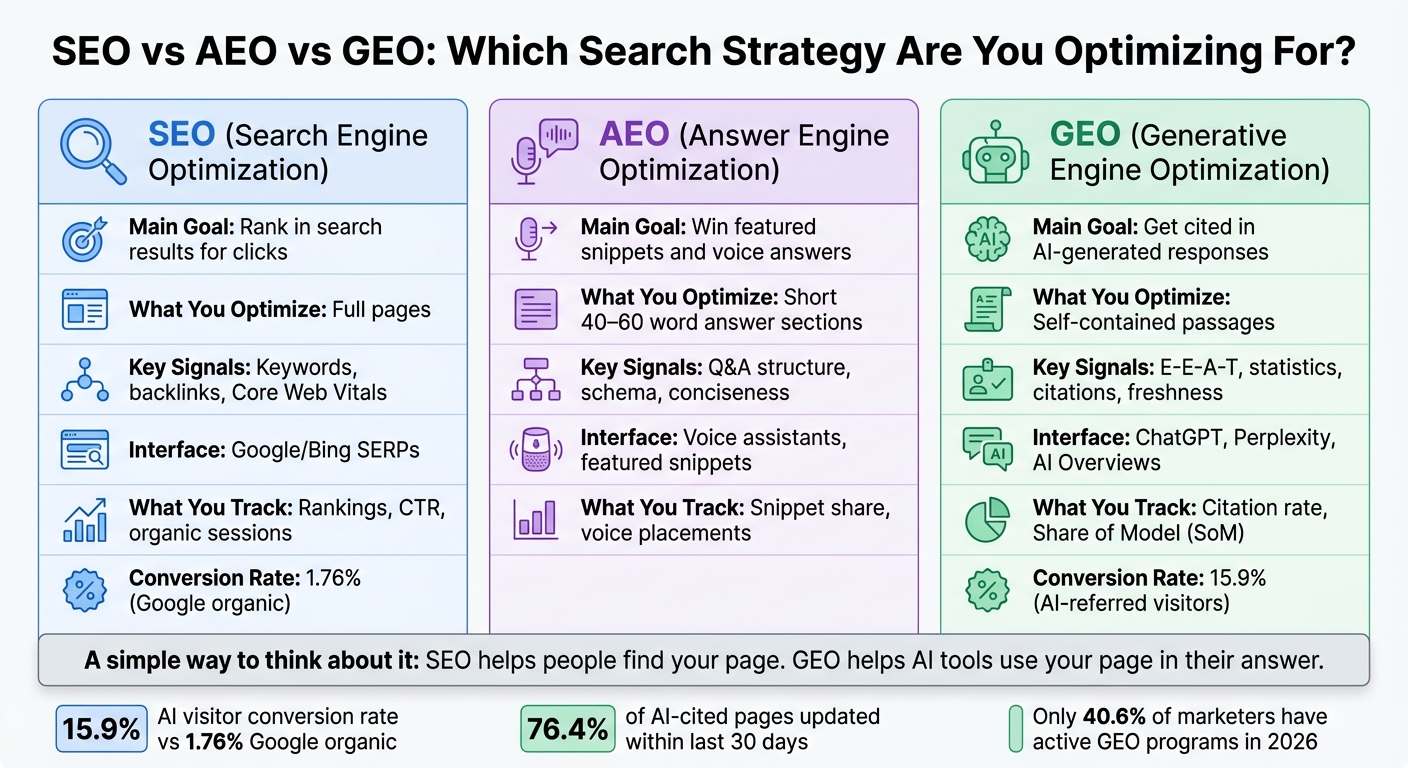
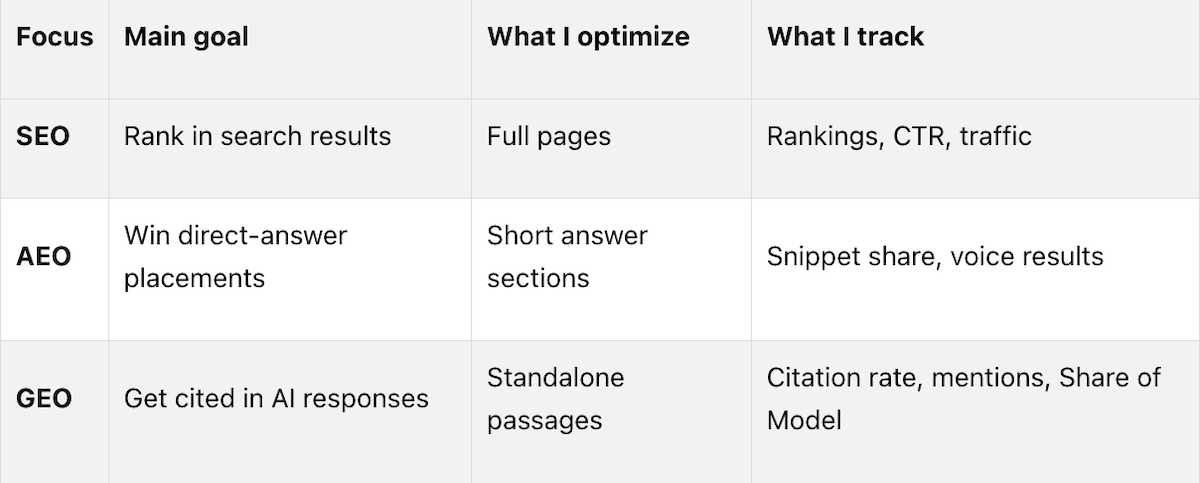
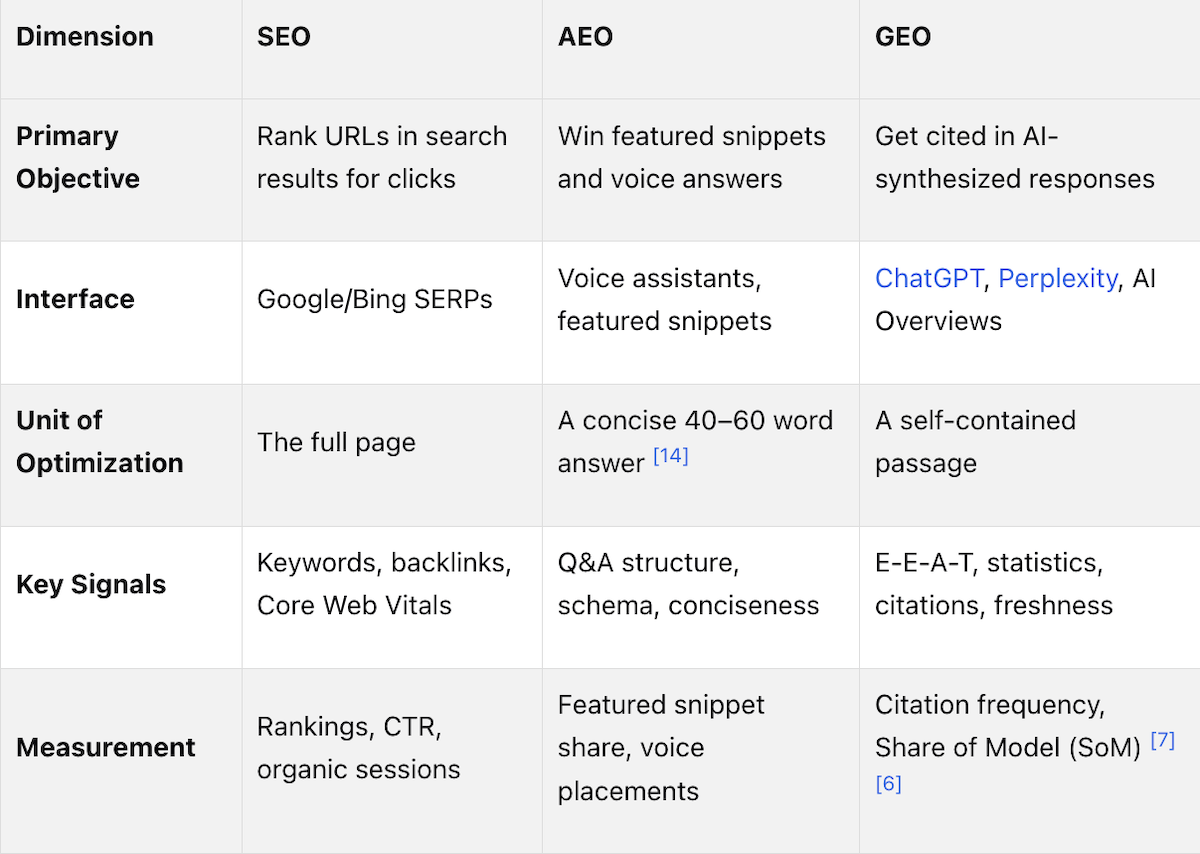
SEO aims for rankings and clicks. AEO aims for featured snippets and direct answers. GEO aims for citations inside AI-generated responses from tools like ChatGPT, Perplexity, and Google AI Overviews. The unit of optimization shifts from the full page to individual self-contained passages that AI systems can retrieve, understand, and cite independently.
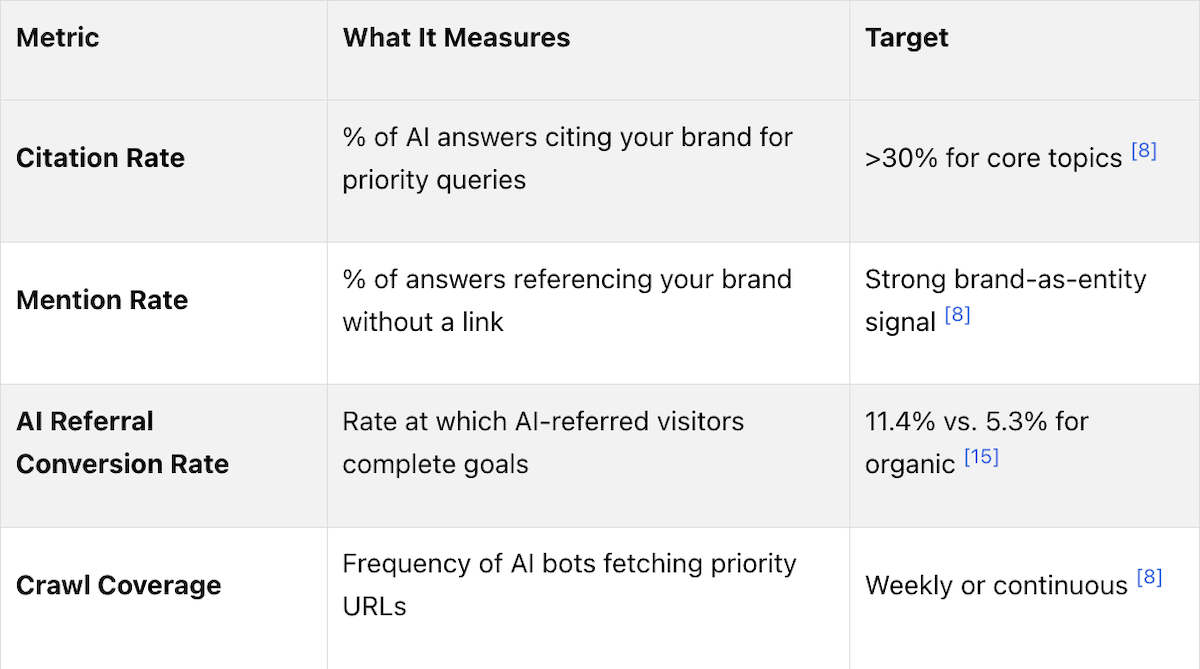
Google AI Overviews now reach 2 billion monthly users and 93% of Google AI Mode sessions end without a website visit. At the same time, AI-referred visitors convert at 15.9% compared to 1.76% for standard organic search. That combination means AI citation is now where high-intent buying decisions are being influenced, regardless of where a brand ranks in traditional results.
AI systems look for content that is clear, structured, and easy to extract. Answer-first openings, statistics with citations, and content updated within the last 30 days all improve citation eligibility. Pages with FAQPage and Article schema markup, crawl access for AI bots, and self-contained 40 to 60 word answer sections at the top of each major section are significantly more likely to be cited than pages optimized only for traditional rankings.
Share of Model measures the percentage of relevant queries in your market where your brand appears in AI-generated responses. It is the GEO equivalent of search market share and captures visibility that traditional ranking and traffic metrics miss entirely. For enterprise teams, it is the single most important indicator of AI search presence.
Brand mentions on independent platforms like industry publications, LinkedIn, and YouTube correlate with AI visibility at a rate of 0.664, compared to 0.218 for traditional backlinks. That gap means off-site presence is not just a supporting signal — it is one of the primary factors AI systems use to assess whether a brand is a credible and authoritative citation source.